 ChipApex | Global Electronic Components Supplier
SEARCH
Search Product
Search Post
— IC芯片 | 连接器 | 传感器 | 被动器件 —
Search productSearch post
— IC芯片 | 连接器 | 传感器 | 被动器件 —
Consult the customer manager about the wholesale price.
consultation hotline:86-132-6715-2157
email:[email protected]
Contact the product manager for consultation. One-stop consultation is available.
Do you want a lower wholesale price? Please send us your inquiry and we will reply immediately.
The AD8018ARU-REEL7 is a dual high-speed current feedback amplifier designed for xDSL line driving applications. It operates on a single supply voltage ranging from 3.3 V to 8 V, with typical operation at 5 V. The device delivers a slew rate of 300 V/µs and a bandwidth of 130 MHz at unity gain. Each channel provides a linear output current of 400 mA into a differential load while maintaining rail-to-rail output swing within 0.5 V of the supply rails. Key performance metrics include an input offset voltage of 1 mV, a supply current of 9 mA per amplifier in full power mode, and low noise density of 4.5 nV/√Hz.
Verify the specific ordering suffix REEL7 corresponds to the 14-lead TSSOP package configuration as defined in the manufacturer's ordering guide. Confirm that the component meets the required temperature range of -40°C to +85°C for the intended application environment. Ensure compatibility with the PCB footprint for the RU-14 package type during procurement planning.
Select this component when high output current and low distortion are critical for driving twisted-pair lines from a single 5 V supply. The dual-channel architecture allows for differential signaling without requiring external phase inversion circuits. Consider the thermal dissipation limits of the TSSOP package if operating near maximum supply voltages or delivering high line power levels.
This part belongs to the AD8018 family of special purpose amplifiers manufactured by Analog Devices. It is specifically engineered as a line driver for xDSL applications, distinguishing it from general-purpose operational amplifiers by its optimized current feedback architecture and integrated power management features. The device complements other Analog Devices signal chain components used in broadband access networks.
The AD8018ARZ serves as a pin-compatible alternative offering the same electrical specifications but housed in an 8-lead SOIC package. Designers must account for the difference in pin count and physical dimensions when substituting between the TSSOP and SOIC variants. No other direct functional substitutes are documented in the provided datasheet.
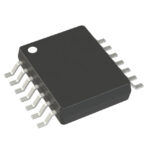 AD8018ARU-REEL7
The activity of extra discounts on wholesale prices is in full swing…
Please fill in your contact information and we will send you the latest wholesale price list.





