 ChipApex | Global Electronic Components Supplier
SEARCH
Search Product
Search Post
— IC芯片 | 连接器 | 传感器 | 被动器件 —
Search productSearch post
— IC芯片 | 连接器 | 传感器 | 被动器件 —
Consult the customer manager about the wholesale price.
consultation hotline:86-132-6715-2157
email:[email protected]
Contact the product manager for consultation. One-stop consultation is available.
Do you want a lower wholesale price? Please send us your inquiry and we will reply immediately.
The AD8072ARM is a dual current feedback video amplifier manufactured by Analog Devices Inc. It operates within an industrial temperature range of -40°C to +85°C and utilizes an 8-lead µSOIC package. The device features a small signal bandwidth of 100 MHz at a gain of +2, with a slew rate of 500 V/µs and a settling time of 25 ns to 0.1%. It consumes 3.5 mA per amplifier and supports single supply voltages from 5 V to 12 V or dual supplies up to ±6 V. Key distortion metrics include a differential gain error of 0.05% and a differential phase error of 0.1°.
Verify the specific ordering suffix to confirm the package type and reel specifications. Confirm that the industrial temperature grade (-40°C to +85°C) matches the design requirements. Ensure ESD precautions are observed during handling due to the sensitivity of the internal circuitry. Cross-reference the datasheet revision to ensure all electrical characteristics align with the intended application parameters.
Select this component when a low-cost, dual-channel solution is required for general-purpose high-speed applications. It is suitable for designs needing operation on a single 5 V supply or dual supplies up to ±6 V. Consider the 8-lead µSOIC package for space-constrained layouts. Verify that the feedback resistor values remain within the recommended range to maintain optimal gain flatness and stability.
The AD8072ARM belongs to the AD8072/AD8073 family of low-cost, current feedback amplifiers designed for high-volume, cost-sensitive markets. While the standard AD8072 variants operate over the commercial temperature range (0°C to 70°C), the ARM suffix specifically denotes the industrial temperature extension. This family is optimized for driving 150 Ω video loads while maintaining solid video specifications.
The AD8072JR serves as a direct functional substitute but is limited to the commercial temperature range (0°C to 70°C). For industrial temperature requirements, verify availability of other AD8072 variants with appropriate suffixes. No other cross-model replacements are confirmed in the provided documentation.
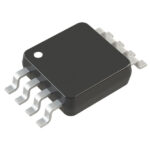 AD8072ARM
The activity of extra discounts on wholesale prices is in full swing…
Please fill in your contact information and we will send you the latest wholesale price list.





