 ChipApex | Global Electronic Components Supplier
SEARCH
Search Product
Search Post
— IC芯片 | 连接器 | 传感器 | 被动器件 —
Search productSearch post
— IC芯片 | 连接器 | 传感器 | 被动器件 —
Consult the customer manager about the wholesale price.
consultation hotline:86-132-6715-2157
email:[email protected]
Contact the product manager for consultation. One-stop consultation is available.
Do you want a lower wholesale price? Please send us your inquiry and we will reply immediately.
The AD8115ASTZ is a high-speed, non-blocking 16 × 16 video crosspoint switch matrix manufactured by Analog Devices Inc. It features buffered inputs and sixteen independent output amplifiers configured with a fixed gain of +2. The device operates on dual ±5 V power supplies and supports both serial and parallel digital control interfaces for programming the switch array. It provides excellent video performance metrics, including a −3 dB bandwidth of 225 MHz, a slew rate of 375 V/µs, and low crosstalk of −70 dB at 5 MHz. The component is housed in a 100-lead LQFP package (14 mm × 14 mm) and functions within an extended industrial temperature range of −40°C to +85°C.
Verify that the specific part number matches the required gain configuration, as the AD8115 offers a gain of +2 compared to the unity gain AD8114. Confirm the package type is the 100-lead LQFP and ensure the operating temperature range meets the application's environmental requirements. Check datasheet specifications for supply voltage tolerances and logic level compatibility before integration.
Select the AD8115ASTZ when a voltage gain of +2 is required for the crosspoint switching application. Consider the AD8114 if a gain of 1 is preferred. Evaluate the need for serial versus parallel control based on available microcontroller pins and speed requirements. Ensure the design can accommodate the dual ±5 V supply rails and the thermal dissipation characteristics of the 100-lead LQFP package under maximum load conditions.
The AD8115 is part of the AD8114/AD8115 family of high-speed video crosspoint switches from Analog Devices. It shares the same physical footprint, pinout, and control logic as the AD8114, differing primarily in its internal amplifier gain setting. This family is designed for applications requiring large-scale signal routing with minimal signal degradation and low power consumption relative to performance capabilities.
The AD8114ASTZ serves as a direct functional substitute if a gain of 1 is acceptable instead of +2. For larger arrays, multiple AD8115 units can be cascaded using the serial data out feature. Smaller matrix requirements may utilize the AD8108, AD8109, AD8110, or AD8111 models.
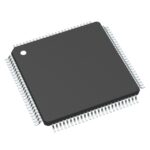 AD8115ASTZ
The activity of extra discounts on wholesale prices is in full swing…
Please fill in your contact information and we will send you the latest wholesale price list.





