 ChipApex | Global Electronic Components Supplier
SEARCH
Search Product
Search Post
— IC芯片 | 连接器 | 传感器 | 被动器件 —
Search productSearch post
— IC芯片 | 连接器 | 传感器 | 被动器件 —
Consult the customer manager about the wholesale price.
consultation hotline:86-132-6715-2157
email:[email protected]
Contact the product manager for consultation. One-stop consultation is available.
Do you want a lower wholesale price? Please send us your inquiry and we will reply immediately.
The AD8122ACPZ-R7 is a triple differential receiver and equalizer designed to compensate for transmission losses in unshielded twisted pair (UTP) cables up to 300 meters and coaxial cables up to 200 meters. It features adjustable high-frequency peaking, broadband flat gain, and low-pass filter cutoff controls. The device operates with ±5 V supplies, providing a large signal bandwidth of 270 MHz at unity gain and 165 MHz at double gain. It includes two on-chip comparators for sync pulse extraction and supports gain settings of 1 or 2 per channel.
Verify the specific suffix R7 indicates reel packaging when sourcing. Confirm the LFCSP-40 package variant matches the design requirements. Ensure the extended temperature range rating of −40°C to +85°C aligns with the operational environment. Check for RoHS compliance status as specified in the manufacturer documentation.
Select this component for applications requiring long-distance differential video transmission over copper cabling. The adjustable compensation parameters allow adaptation to varying cable lengths and types. Consider the power supply requirements of ±5 V and the thermal dissipation capabilities of the 40-lead LFCSP package for system integration.
This part belongs to the Analog Devices AD8122 family of triple differential receivers. It is specifically engineered for high-speed video signal integrity restoration over lossy transmission media. The device complements driver ICs like the AD8134 and AD8148 in complete video transmission solutions.
No public confirmed substitutes are identified in the provided documentation. Designers should verify pin compatibility and electrical specifications if considering alternative triple differential receivers from other manufacturers.
At G = 1, differential inputs exceeding ±3.4 V may cause the output to stick to a supply rail. The device recovers when the input magnitude falls below 200 mV. Input protection circuits are recommended for G = 1 applications to prevent this condition.
The COAX/UTP pin selects the internal compensation response curve. Connecting it to Logic 1 configures the device for coaxial cable compensation, while leaving it floating or connecting to Logic 0 configures it for UTP cable compensation.
Yes, while optimized for RGB applications, the triple-channel architecture can also compensate for YPbPr (component video) signals transmitted over UTP or coaxial cables.
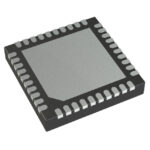 AD8122ACPZ-R7
The activity of extra discounts on wholesale prices is in full swing…
Please fill in your contact information and we will send you the latest wholesale price list.





