 ChipApex | Global Electronic Components Supplier
SEARCH
Search Product
Search Post
— IC芯片 | 连接器 | 传感器 | 被动器件 —
Search productSearch post
— IC芯片 | 连接器 | 传感器 | 被动器件 —
Consult the customer manager about the wholesale price.
consultation hotline:86-132-6715-2157
email:[email protected]
Contact the product manager for consultation. One-stop consultation is available.
Do you want a lower wholesale price? Please send us your inquiry and we will reply immediately.
The AD8143ACPZ-R2 is a triple differential-to-single-ended receiver designed for high-speed signal transmission over twisted pair cables. It features three independent amplifiers with a large signal bandwidth of 160 MHz and a slew rate of 1000 V/µs at G=1. The device provides a common-mode rejection ratio of 65 dB at 10 MHz and an input common-mode range of ±10.5 V with ±12 V supplies. It operates on a wide power supply range from +5 V to ±12 V, drawing approximately 44 mA quiescent current. Two auxiliary comparators are integrated for digital signal reception.
Verify the specific suffix R2 against the manufacturer's ordering guide to confirm packaging configuration. Ensure compatibility with the LFCSP-32 footprint during PCB layout. Confirm that the operating temperature range meets the application requirements of -40°C to +85°C. Check for moisture sensitivity levels if reflow soldering is required.
Select this component when receiving differential analog or video signals over long cable runs where common-mode noise rejection is critical. The wide supply voltage range allows flexibility in system design without isolation transformers. Consider the integrated comparators if synchronization signal decoding is needed alongside video reception.
The AD8143 belongs to Analog Devices' family of low-cost differential line receivers. It is often paired with drivers like the AD8133 or AD8134 to form complete transmission solutions. The device utilizes an active-feedback architecture distinct from conventional operational amplifiers, offering high input impedance and excellent balance.
Public documentation confirms the AD8145 as a compatible alternative within the same product family. Both devices share similar triple differential receiver architectures and comparator integration. Verify pinout compatibility and electrical specifications before substitution.
The device features a wide input common-mode range that maintains signal integrity even when there are several volts difference in ground potential between the drive and receive ends, eliminating the need for isolation transformers.
The comparators are used to receive digital signals or to decode video synchronization pulses encoded on the received common-mode voltages.
Yes, the closed-loop gain is user-adjustable using external resistors connected to the feedback inputs. The device is stable at a gain of 1.
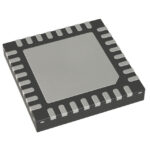 AD8143ACPZ-R2
The activity of extra discounts on wholesale prices is in full swing…
Please fill in your contact information and we will send you the latest wholesale price list.






