 ChipApex | Global Electronic Components Supplier
SEARCH
Search Product
Search Post
— IC芯片 | 连接器 | 传感器 | 被动器件 —
Search productSearch post
— IC芯片 | 连接器 | 传感器 | 被动器件 —
Consult the customer manager about the wholesale price.
consultation hotline:86-132-6715-2157
email:[email protected]
Contact the product manager for consultation. One-stop consultation is available.
Do you want a lower wholesale price? Please send us your inquiry and we will reply immediately.
The AD8145YCPZ-R7 is a triple, low-cost, differential-to-single-ended receiver designed for high-speed analog signal processing. It features a 500 MHz bandwidth and 2000 V/µs slew rate at unity gain. The device operates on supply voltages between 4.5 V and 11 V with a quiescent current of 48.5 mA. It provides a common-mode rejection ratio of 69 dB at 10 MHz and includes two auxiliary comparators with hysteresis.
Verify that the specific suffix R7 corresponds to the reel packaging format required for automated assembly processes. Confirm that the LFCSP-32 package thermal requirements are met by the target PCB layout, specifically ensuring the exposed paddle is soldered to a ground plane. Check for moisture sensitivity level ratings prior to soldering to prevent package damage during reflow.
Select this component when a triple-channel differential receiver is needed for high-bandwidth video signals. Ensure the application supports the extended industrial temperature range of -40°C to +105°C. Consider the AD8145W variant if automotive qualification under AEC-Q100 standards is mandatory for the final system environment.
This part belongs to the AD8145 family of high-speed video amplifiers manufactured by Analog Devices Inc. It is functionally similar to the AD8143 but offers enhanced performance characteristics suitable for demanding video transmission applications. The YCPZ-R7 designation indicates the specific lead-free, RoHS-compliant LFCSP package configuration with reel tape packaging.
The AD8145W serves as the automotive-grade equivalent within the same product family. Designers requiring AEC-Q100 qualification should verify pin compatibility and thermal performance differences before substituting the standard industrial grade part with the automotive version.
Gain is set to 1 by connecting the GAIN_x pin directly to the amplifier output. Gain is set to 2 by connecting the GAIN_x pin to a reference voltage, typically ground.
The REF_x inputs allow designers to apply a DC offset or level shift the output signals independently for each channel.
Yes, the two auxiliary comparators with hysteresis can be used to decode video sync signals encoded on common-mode voltages, receive digital signals, or function as general-purpose comparators.
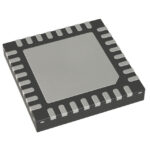 AD8145YCPZ-R7
The activity of extra discounts on wholesale prices is in full swing…
Please fill in your contact information and we will send you the latest wholesale price list.





