 ChipApex | Global Electronic Components Supplier
SEARCH
Search Product
Search Post
— IC芯片 | 连接器 | 传感器 | 被动器件 —
Search productSearch post
— IC芯片 | 连接器 | 传感器 | 被动器件 —
Consult the customer manager about the wholesale price.
consultation hotline:86-132-6715-2157
email:[email protected]
Contact the product manager for consultation. One-stop consultation is available.
Do you want a lower wholesale price? Please send us your inquiry and we will reply immediately.
The AD8147ACPZ-RL is a triple differential driver for wideband video applications. It features a fixed gain of 2 V/V and converts single-ended or differential inputs to differential outputs. The device operates on supply voltages ranging from +4.5 V to ±5.5 V with a quiescent current of 61.5 mA at ±5 V. It provides a large signal bandwidth of 600 MHz and a slew rate of 3000 V/µs. The component integrates sync-on-common-mode encoding for horizontal and vertical synchronization signals. It is housed in a 24-lead LFCSP package.
Verify the specific suffix RL against the manufacturer's ordering guide to confirm reel packaging specifications. Ensure the LFCSP thermal pad is properly connected to a ground plane during assembly to maintain specified thermal resistance. Confirm that the operating temperature range meets the system requirements, as the device is rated for -40°C to +85°C. Cross-reference the datasheet revision to ensure all electrical characteristics align with the design specifications.
Select this component when a fixed gain of 2 is required for driving RGB video signals. It is suitable for systems utilizing Category 5 UTP cables or differential PCB transmission lines. Consider the AD8146 if adjustable output common-mode voltage is needed instead of integrated sync encoding. Verify that the 600 MHz large signal bandwidth satisfies the highest resolution signal requirements of the application.
This part belongs to the AD8146/AD8147/AD8148 family of triple differential drivers manufactured by Analog Devices. These devices are designed for high-resolution component video signals and utilize the second-generation XFCB bipolar process. The family shares similar form factors and basic operational principles but differs in gain settings and common-mode control features.
The AD8146ACPZ-RL offers adjustable output common-mode voltage but lacks integrated sync encoding. The AD8148ACPZ-RL provides a fixed gain of 4 V/V instead of 2 V/V. Both share the same LFCSP-24 package and general pinout structure, though functional differences require circuit redesign.
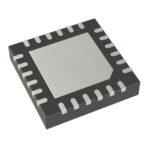 AD8147ACPZ-RL
The activity of extra discounts on wholesale prices is in full swing…
Please fill in your contact information and we will send you the latest wholesale price list.





