 ChipApex | Global Electronic Components Supplier
SEARCH
Search Product
Search Post
— IC芯片 | 连接器 | 传感器 | 被动器件 —
Search productSearch post
— IC芯片 | 连接器 | 传感器 | 被动器件 —
Consult the customer manager about the wholesale price.
consultation hotline:86-132-6715-2157
email:[email protected]
Contact the product manager for consultation. One-stop consultation is available.
Do you want a lower wholesale price? Please send us your inquiry and we will reply immediately.
The AD8210YRZ is a high-voltage, bidirectional current shunt monitor manufactured by Analog Devices Inc. It operates with a common-mode voltage range from −2 V to +65 V during operation and withstands up to +68 V in survival conditions. The device features a fixed gain of 20 V/V, providing a ratiometric half-scale output offset for simplified signal conditioning. It offers excellent AC and DC performance, including a typical CMRR of 120 dB at DC and 80 dB at 100 kHz. The output is buffered with a 5 mA drive capability. It functions within an extended temperature range of −40°C to +125°C and is housed in an 8-lead SOIC package.
Verify the specific revision level (e.g., Rev A, C, or D) against your design requirements, as datasheet parameters may vary slightly between revisions. Confirm that the 8-lead SOIC package dimensions match your PCB footprint exactly. Ensure the operating environment stays within the specified -40°C to +125°C range to maintain guaranteed performance metrics. Check for any updated RoHS compliance status if required by your manufacturing standards.
Select this component when high-side or low-side bidirectional current monitoring is required in automotive or industrial environments. It is suitable for applications demanding high common-mode voltage tolerance without external level shifting. Consider its fixed 20 V/V gain for designs where precise calibration is less critical than simplicity. Evaluate the 5 mA output drive strength against the input impedance of downstream analog-to-digital converters or microcontrollers.
The AD8210 belongs to Analog Devices' family of high-voltage current shunt monitors, designed for robust performance in electric vehicle and industrial power systems. Unlike standard operational amplifiers, it integrates precision matched resistors and specialized input stages to handle large common-mode voltages. This integration reduces board space and improves accuracy compared to discrete solutions using general-purpose op-amps.
Publicly confirmed substitute part numbers are not available in the provided documentation. Designers should consult official Analog Devices resources for cross-reference data before considering alternative components.
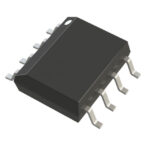 AD8210YRZ
The activity of extra discounts on wholesale prices is in full swing…
Please fill in your contact information and we will send you the latest wholesale price list.




