 ChipApex | Global Electronic Components Supplier
SEARCH
Search Product
Search Post
— IC芯片 | 连接器 | 传感器 | 被动器件 —
Search productSearch post
— IC芯片 | 连接器 | 传感器 | 被动器件 —
Consult the customer manager about the wholesale price.
consultation hotline:86-132-6715-2157
email:[email protected]
Contact the product manager for consultation. One-stop consultation is available.
Do you want a lower wholesale price? Please send us your inquiry and we will reply immediately.
The AD8214WYRMZ-R7 is a single-channel current shunt threshold detector manufactured by Analog Devices Inc. It operates within a supply voltage range of 5 V to 65 V and draws a typical operating supply current of 1.2 mA. The device features an input common-mode voltage range from 5 V to 65 V, ensuring compatibility with high-side sensing applications. Key electrical specifications include a common-mode rejection ratio (CMRR) of 80 dB, an input bias current of 12 nA, and an input offset voltage of 3 mV. It is qualified under AEC-Q100 standards for automotive reliability and functions across an extended temperature range from -40°C to +125°C.
Verify the specific suffix R7 indicates reel packaging when sourcing components. Confirm that the AEC-Q100 qualification aligns with your project's automotive or industrial reliability requirements. Ensure the MSOP-8 package dimensions match your PCB footprint constraints. Cross-reference the manufacturer datasheet for any recent product change notices affecting pinout or electrical characteristics before finalizing procurement.
Select this component when a dedicated threshold detector is preferred over standard amplifiers to reduce bill of materials complexity. The 80 dB CMRR provides adequate noise immunity for general-purpose shunt monitoring. Consider the 1.2 mA supply current against system power budgets. The wide common-mode range eliminates the need for level shifting in high-voltage rails. Verify thermal performance within the MSOP-8 package for your specific ambient conditions.
This part belongs to the AD8214 series of current sense amplifiers designed for high-side monitoring. It integrates internal reference and comparator logic to simplify circuit design compared to discrete solutions. The device serves as a bridge between analog signal processing and digital logic interfaces in power management architectures.
Check for AD8214WYRMZ variants with different packaging options if reel quantities are not required. Evaluate AD8212 series devices if adjustable gain is needed instead of fixed threshold detection. Verify pin-to-pin compatibility with other Analog Devices current sense amplifiers before substitution.
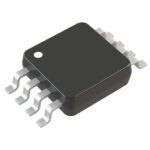 AD8214WYRMZ-R7
The activity of extra discounts on wholesale prices is in full swing…
Please fill in your contact information and we will send you the latest wholesale price list.





