 ChipApex | Global Electronic Components Supplier
SEARCH
Search Product
Search Post
— IC芯片 | 连接器 | 传感器 | 被动器件 —
Search productSearch post
— IC芯片 | 连接器 | 传感器 | 被动器件 —
Consult the customer manager about the wholesale price.
consultation hotline:86-132-6715-2157
email:[email protected]
Contact the product manager for consultation. One-stop consultation is available.
Do you want a lower wholesale price? Please send us your inquiry and we will reply immediately.
The AD829JNZ is a high-speed, low-noise video operational amplifier manufactured by Analog Devices Inc. It features a gain bandwidth product of 750 MHz and a slew rate of 230 V/µs. The device operates within a supply voltage range of ±5 V to ±15 V (maximum 36 V) and consumes 5 mA of supply current. It offers an input voltage noise of 1.7 nV/√Hz and input current noise of 1.5 pA/√Hz. The component supports gains from 1 to 20 with external compensation, maintaining over 50 MHz bandwidth. It is housed in an 8-lead PDIP package and functions as a general-purpose amplifier suitable for professional video applications.
Verify the specific suffix JNZ corresponds to the PDIP-8 through-hole package configuration required for your design. Confirm RoHS compliance status and lead content details against the latest manufacturer datasheet revision before finalizing procurement. Ensure supply chain availability aligns with project timelines, as distribution channels may vary by region.
Select this component when designing circuits requiring precise video signal handling with minimal distortion. The external compensation feature provides flexibility for optimizing bandwidth versus stability trade-offs across different gain settings. Consider the 5 mA supply current constraint for power-sensitive designs and verify that the 230 V/µs slew rate meets the dynamic requirements of the target application signals.
The AD829 series represents Analog Devices' specialized approach to video amplification, combining speed with precision. The AD829JNZ variant specifically denotes the plastic dual in-line package version. This part belongs to a family designed to bridge the gap between standard op amps and dedicated video buffers, offering user-adjustable performance parameters not typically found in fixed-compensation devices.
Direct pin-compatible substitutes within the same family include other AD829 variants such as AD829ANZ or AD829KNZ, which differ primarily in temperature grade or packaging. Verify electrical parameter equivalence, particularly regarding offset voltage and bandwidth, when substituting to ensure circuit performance remains within specified limits.
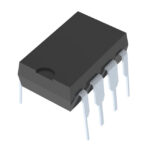 AD829JNZ
The activity of extra discounts on wholesale prices is in full swing…
Please fill in your contact information and we will send you the latest wholesale price list.





