 ChipApex | Global Electronic Components Supplier
SEARCH
Search Product
Search Post
— IC芯片 | 连接器 | 传感器 | 被动器件 —
Search productSearch post
— IC芯片 | 连接器 | 传感器 | 被动器件 —
Consult the customer manager about the wholesale price.
consultation hotline:86-132-6715-2157
email:[email protected]
Contact the product manager for consultation. One-stop consultation is available.
Do you want a lower wholesale price? Please send us your inquiry and we will reply immediately.
The AD829JR is a high-speed, low-noise video operational amplifier manufactured by Analog Devices Inc. It features a gain bandwidth product of 600 MHz at ±5 V and 750 MHz at ±15 V, with an uncompensated slew rate of 230 V/µs. The device maintains a small-signal bandwidth greater than 50 MHz for gains ranging from 1 to 20 through external compensation. Key electrical specifications include an input voltage noise of 1.7 nV/√Hz, a maximum input offset voltage of 1 mV over the temperature range, and a quiescent supply current of 5 mA. It operates on dual supplies from ±5 V to ±15 V.
Verify the suffix 'JR' corresponds to the 8-lead SOIC package and the commercial operating temperature range of 0°C to 70°C. Confirm that the ordering information matches the specific revision of the datasheet provided. Ensure compatibility with the required supply voltage range of ±5 V to ±15 V for the intended application environment.
Select this component when high speed and low noise are critical requirements for video signal processing. The external compensation feature provides flexibility to trade off bandwidth against slew rate or peaking based on circuit topology. Consider the 8-lead SOIC package constraints regarding thermal dissipation if operating near maximum ratings. Verify that the required gain range falls within the 1 to 20 specification for optimal performance.
The AD829 series includes variants such as the AD829AR for extended temperature ranges and the AD829AQ/S for military specifications. The AD829JR specifically denotes the commercial grade version housed in a small outline integrated circuit package. This family is designed for applications requiring precise video signal integrity and fast transient response.
Public confirmed substitute part numbers: None identified in source material.
The external compensation pin allows users to customize the frequency response. By selecting different capacitance values, the bandwidth can be optimized for a given load and supply voltage, or the output can be clamped.
Current feedback compensation allows for enhanced full power bandwidth and slew rate compared to traditional shunt compensation, particularly for inverting configurations, though it may require careful selection of feedback resistors to maintain stability.
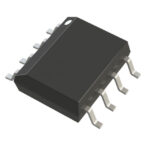 AD829JR
The activity of extra discounts on wholesale prices is in full swing…
Please fill in your contact information and we will send you the latest wholesale price list.





