 ChipApex | Global Electronic Components Supplier
SEARCH
Search Product
Search Post
— IC芯片 | 连接器 | 传感器 | 被动器件 —
Search productSearch post
— IC芯片 | 连接器 | 传感器 | 被动器件 —
Consult the customer manager about the wholesale price.
consultation hotline:86-132-6715-2157
email:[email protected]
Contact the product manager for consultation. One-stop consultation is available.
Do you want a lower wholesale price? Please send us your inquiry and we will reply immediately.
The AD8305ACP-R2 is a microminiature logarithmic converter optimized for fiber optic systems, utilizing translinear junction-based techniques. It provides a wide dynamic range of 10 nA to 1 mA (100 dB) with a nominal slope of 10 mV/dB and an intercept of 1 nA. Operating on a single supply from 3 V to 12 V or dual supplies, it features low quiescent current (~5 mA). The device includes a buffer amplifier capable of driving substantial loads with rail-to-rail output swing within 100 mV of the rails. It is housed in a 16-lead LFCSP package rated for operation between −40°C and +85°C.
Verify that the ordering suffix matches the required tape-and-reel configuration for automated assembly. Confirm the specific package variant corresponds to the 16-lead LFCSP form factor. Ensure the temperature grade aligns with the industrial specification range. Cross-reference the revision level with the latest datasheet to confirm pinout consistency. Validate that the component meets all absolute maximum ratings for your specific supply voltage conditions.
Select this component when a high-dynamic-range logarithmic response is required for low-level current signals. It is suitable for applications where battery life is critical due to its low quiescent current consumption. Consider the internal buffer if signal conditioning or impedance matching is needed before analog-to-digital conversion. Evaluate the need for log-ratio capabilities if measuring relative changes in optical power or current ratios.
The AD8305 belongs to Analog Devices' family of logarithmic converters designed for precision signal processing. It shares architectural similarities with other devices in the series but is specifically tuned for the 10 nA to 1 mA range. Unlike wider-bandwidth RF log amps, it focuses on baseband accuracy and low-frequency noise performance, making it distinct from high-speed communication receivers.
The AD8304 offers a wider dynamic range of 160 dB but requires a different package and has different pinout characteristics. Verify interface compatibility and thermal management requirements when substituting. Check if the extended range of the alternative part is necessary for your specific application constraints.
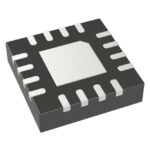 AD8305ACP-R2
The activity of extra discounts on wholesale prices is in full swing…
Please fill in your contact information and we will send you the latest wholesale price list.





