 ChipApex | Global Electronic Components Supplier
SEARCH
Search Product
Search Post
— IC芯片 | 连接器 | 传感器 | 被动器件 —
Search productSearch post
— IC芯片 | 连接器 | 传感器 | 被动器件 —
Consult the customer manager about the wholesale price.
consultation hotline:86-132-6715-2157
email:[email protected]
Contact the product manager for consultation. One-stop consultation is available.
Do you want a lower wholesale price? Please send us your inquiry and we will reply immediately.
The AD830JRZ-RL is a high-speed video difference amplifier manufactured by Analog Devices Inc. It features an 85 MHz unity gain bandwidth and a 360 V/µs slew rate, designed for accurate amplification of fully differential signals at video frequencies. The device provides a minimum output drive of ±50 mA and maintains excellent common-mode rejection even at high frequencies. It operates on supply voltages ranging from ±5 V to ±15 V, with a maximum input offset voltage of 3 mV. Packaged in an SOIC-8 surface-mount format, it delivers low distortion and fast settling times suitable for demanding analog signal processing tasks.
Verify the specific suffix RL indicates reel packaging when sourcing. Confirm the operating temperature range matches system requirements, as industrial variants may differ. Ensure the SOIC-8 footprint aligns with PCB layout constraints. Cross-reference the manufacturer datasheet for exact electrical limits under varying supply conditions. Validate RoHS compliance status for regulatory adherence in target markets.
Select this component for applications requiring precise differential signal handling at video frequencies. Consider the 85 MHz bandwidth and 360 V/µs slew rate for high-speed signal integrity. Evaluate the ±50 mA output drive against load requirements. Compare input offset voltage specifications against precision needs. Assess thermal management capabilities within the SOIC-8 package for the intended environment.
This part belongs to the AD830 series of high-speed video difference amplifiers. It shares core functional characteristics with other variants like the AD830AN but differs in packaging and potentially temperature ratings. The series is engineered for applications demanding high common-mode rejection and fast transient response. It serves as a monolithic alternative to discrete difference amplifier designs, offering improved high-frequency performance.
Direct substitutes include other AD830 family members such as AD830AR or AD830AN, provided pin compatibility and electrical parameters match. Verify that replacement parts maintain the required 85 MHz bandwidth and output drive current. Check for any differences in supply voltage ranges or operating temperature specifications before implementation.
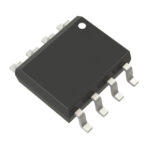 AD830JRZ-RL
The activity of extra discounts on wholesale prices is in full swing…
Please fill in your contact information and we will send you the latest wholesale price list.





