 ChipApex | Global Electronic Components Supplier
SEARCH
Search Product
Search Post
— IC芯片 | 连接器 | 传感器 | 被动器件 —
Search productSearch post
— IC芯片 | 连接器 | 传感器 | 被动器件 —
Consult the customer manager about the wholesale price.
consultation hotline:86-132-6715-2157
email:[email protected]
Contact the product manager for consultation. One-stop consultation is available.
Do you want a lower wholesale price? Please send us your inquiry and we will reply immediately.
The AD8328 is a 5 V upstream cable line driver designed for DOCSIS and EuroDOCSIS reverse path transmission. It features digitally programmable gain over a 59 dB range with 1 dB steps via an SPI interface. The device supports differential or single-ended inputs, maintaining a 300 Ω output impedance that matches 75 Ω loads through a 2:1 transformer. Key performance metrics include -57.5 dBc SFDR at 21 MHz and -54 dBc at 65 MHz, with an upper bandwidth of 107 MHz across the full gain range.
Verify component authenticity through authorized Analog Devices distributors or direct manufacturer channels. Confirm package type (LFCSP or QSOP) and temperature grade (-40°C to +85°C) against specific design requirements. Check for obsolete status indicators as the datasheet marks this part as obsolete; ensure availability of long-term supply agreements or alternative sourcing strategies if required for production.
Select the AD8328 for applications requiring precise digital gain control in upstream cable transmission systems. Ensure the design accommodates a 5 V single supply and utilizes a 2:1 output transformer for proper impedance matching. Consider the thermal characteristics of the LFCSP versus QSOP package based on board layout constraints. Verify that the host microcontroller can support the required SPI timing parameters for reliable data transfer.
The AD8328 belongs to Analog Devices' lineup of coaxial line drivers tailored for cable modem infrastructure. It serves as a power amplifier stage in reverse path transmission, bridging digital signal processors or DACs with the cable network. Its integration of high-linearity amplification and digital control simplifies the design of compliant DOCSIS upstream paths.
No public confirmed substitutes are listed in the provided documentation. As the datasheet indicates the part is obsolete, engineers should consult Analog Devices for current replacement recommendations or evaluate equivalent products from other manufacturers that meet DOCSIS specifications.
The AD8328 maintains a differential output impedance of 300 Ω regardless of whether the transmitter is enabled or disabled. This allows it to match a 75 Ω load using a 2:1 transformer without requiring external back-termination resistors.
The RAMP pin controls the duration of burst on/off transients. Leaving it unconnected ensures compliance with DOCSIS 2.0 spurious emission requirements by limiting transient dissipation time to no faster than 2 μs.
Yes, the AD8328 accepts either differential or single-ended input signals. For single-ended operation, the input impedance is approximately 800 Ω, while differential input impedance is 1.6 kΩ.
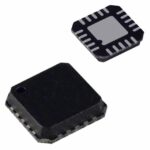 AD8328ACPZ-REEL7
The activity of extra discounts on wholesale prices is in full swing…
Please fill in your contact information and we will send you the latest wholesale price list.






