 ChipApex | Global Electronic Components Supplier
SEARCH
Search Product
Search Post
— IC芯片 | 连接器 | 传感器 | 被动器件 —
Search productSearch post
— IC芯片 | 连接器 | 传感器 | 被动器件 —
Consult the customer manager about the wholesale price.
consultation hotline:86-132-6715-2157
email:[email protected]
Contact the product manager for consultation. One-stop consultation is available.
Do you want a lower wholesale price? Please send us your inquiry and we will reply immediately.
The AD8331ARQ is a single-channel ultralow noise linear-in-dB variable gain amplifier (VGA) from Analog Devices. It integrates an ultralow noise preamplifier, an X-AMP VGA with 48 dB gain range, and a selectable gain postamplifier. The device operates on a single 5 V supply and features a 3 dB bandwidth of 120 MHz. Gain control is provided via a voltage input with a scaling factor of 50 dB/V. The LNA offers 19 dB gain with single-ended input and differential outputs. Input impedance matching is adjustable using a single external resistor without compromising noise performance.
Verify the package type matches the required form factor, as the AD8331 series includes single, dual, and quad channel variants in different packages. Confirm the specific suffix indicates the correct lead frame or tape-and-reel configuration if applicable. Ensure the operating temperature range meets the environmental requirements of the target application. Cross-reference the pinout with the datasheet to avoid integration errors during PCB layout.
Select this component when ultralow noise performance is critical for signal chains operating up to 120 MHz. The single-channel architecture is suitable for applications requiring dedicated gain control without channel-to-channel crosstalk concerns found in multi-channel devices. Consider the power dissipation per channel against thermal constraints. The adjustable output clamping level provides protection for downstream analog-to-digital converters.
The AD8331 is part of a family of variable gain amplifiers that also includes the dual-channel AD8332 and quad-channel AD8334. These devices share similar internal architectures featuring X-AMP technology and ultralow noise preamplifiers. The AD8331 specifically targets single-channel applications where space or channel count is limited compared to the multi-channel options.
Direct replacements within the same family include the AD8332 for dual-channel needs or the AD8334 for quad-channel implementations. Verify pin compatibility and package dimensions when substituting between single, dual, and quad variants. Ensure the replacement device supports the required bandwidth and noise specifications for the specific application context.
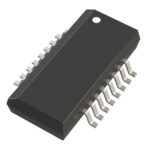 AD8331ARQ
The activity of extra discounts on wholesale prices is in full swing…
Please fill in your contact information and we will send you the latest wholesale price list.





