 ChipApex | Global Electronic Components Supplier
SEARCH
Search Product
Search Post
— IC芯片 | 连接器 | 传感器 | 被动器件 —
Search productSearch post
— IC芯片 | 连接器 | 传感器 | 被动器件 —
Consult the customer manager about the wholesale price.
consultation hotline:86-132-6715-2157
email:[email protected]
Contact the product manager for consultation. One-stop consultation is available.
Do you want a lower wholesale price? Please send us your inquiry and we will reply immediately.
The AD8336ACPZ-WP is a general-purpose, DC-coupled variable gain amplifier featuring an uncommitted preamplifier and X-AMP architecture. It operates over a supply range of ±3 V to ±12 V and a temperature span of −55°C to +125°C. The device provides a VGA gain range of 0 dB to 60 dB with a scaling factor of 50 dB/V. Small-signal bandwidth reaches 115 MHz, while large-signal bandwidth is 80 MHz at 2 V p-p. Quiescent power is 150 mW at ±3 V.
Verify the specific suffix 'WP' against official Analog Devices documentation to confirm it denotes a qualified or enhanced version rather than standard commercial grade. Ensure the package type matches the required PCB footprint. Confirm that the operating temperature range and supply voltage requirements align with the system design constraints before finalizing procurement.
Select this component when a wide dynamic range and high linearity are required for single-ended signals. The differential gain control interface simplifies integration with external controllers. Consider the preamplifier configuration options to optimize noise and bandwidth trade-offs. Verify that the load conditions do not exceed the safe operating limits for the chosen supply voltage.
This part belongs to the AD8336 family of wideband variable gain amplifiers. It is designed for applications requiring precise gain control over extreme environmental conditions. The device integrates a preamplifier and VGA stage, offering flexibility in system design through configurable gain settings and power management features.
Consult official Analog Devices documentation for confirmed substitute part numbers. Do not assume compatibility based on generic specifications alone.
The overall gain is the sum of the preamplifier gain and the VGA gain. The VGA gain is fixed at 34 dB, while the preamplifier gain is set by external resistors, allowing a composite gain range of −14 dB to +46 dB or 0 dB to 60 dB depending on the preamplifier configuration.
The PWRA pin allows for power reduction. When pulled high, it reduces the quiescent current and bandwidth by approximately half, which is advantageous for applications requiring lower power dissipation at higher supply voltages.
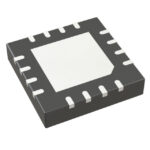 AD8336ACPZ-WP
The activity of extra discounts on wholesale prices is in full swing…
Please fill in your contact information and we will send you the latest wholesale price list.






