 ChipApex | Global Electronic Components Supplier
SEARCH
Search Product
Search Post
— IC芯片 | 连接器 | 传感器 | 被动器件 —
Search productSearch post
— IC芯片 | 连接器 | 传感器 | 被动器件 —
Consult the customer manager about the wholesale price.
consultation hotline:86-132-6715-2157
email:[email protected]
Contact the product manager for consultation. One-stop consultation is available.
Do you want a lower wholesale price? Please send us your inquiry and we will reply immediately.
The AD8337BCPZ-WP is a low noise, single-ended, linear-in-dB, general-purpose variable gain amplifier (VGA) usable at frequencies from dc to 100 MHz with a −3 dB bandwidth of 280 MHz. It features excellent bandwidth uniformity across the entire gain range and low output-referred noise. The device utilizes Analog Devices' exclusive X-AMP architecture with a 24 dB gain range scaled to 19.7 dB/V referenced to VCOM. It operates on supplies of +5 V, ±2.5 V, or ±5 V, consuming only 78 mW with ±2.5 V supplies.
Verify the specific suffix 'WP' against the manufacturer's official ordering guide to confirm it denotes a qualified military or enhanced reliability grade variant, as standard commercial versions lack this designation. Ensure the component matches the exact pinout and thermal pad requirements for your PCB layout. Cross-reference the datasheet revision to confirm all electrical specifications align with your design constraints before finalizing procurement.
Select this component when a low-noise, high-speed VGA is required for driving high-speed analog-to-digital converters. Its DC coupling capability makes it suitable for applications requiring precise control over negative-going pulses, such as those from photodiodes. Consider its power consumption and supply voltage flexibility (+5 V or dual supplies) when designing the power management section of the system.
The AD8337 is part of Analog Devices' portfolio of specialized amplifiers designed for precision signal conditioning. It employs a proprietary dielectrically isolated complementary bipolar process. This family of devices is engineered to provide robust performance in demanding environments, offering a balance of high speed, low noise, and versatile gain control capabilities for various industrial and medical applications.
Direct replacements include other AD8337 variants such as AD8337ACPZ or AD8337ARMZ. Verify that any substitute maintains the same LFCSP-8 package and exposed pad configuration for thermal compatibility. Ensure the alternative meets the 280 MHz bandwidth and 19.7 dB/V gain scaling requirements specified in the original design.
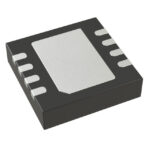 AD8337BCPZ-WP
The activity of extra discounts on wholesale prices is in full swing…
Please fill in your contact information and we will send you the latest wholesale price list.






