 ChipApex | Global Electronic Components Supplier
SEARCH
Search Product
Search Post
— IC芯片 | 连接器 | 传感器 | 被动器件 —
Search productSearch post
— IC芯片 | 连接器 | 传感器 | 被动器件 —
Consult the customer manager about the wholesale price.
consultation hotline:86-132-6715-2157
email:[email protected]
Contact the product manager for consultation. One-stop consultation is available.
Do you want a lower wholesale price? Please send us your inquiry and we will reply immediately.
The AD8392AACPZ-RL is a quad operational amplifier configured as a dual-channel ADSL/ADSL2+ line driver. It operates on a single supply from 10 V to 24 V or dual supplies of ±5 V to ±12 V. Key electrical parameters include a differential slew rate of 515 V/µs, a small-signal bandwidth of 37 MHz, and a linear output current capability of 500 mA. The device delivers a differential output voltage swing up to 42.6 V p-p with low distortion characteristics, including -93 dBc second harmonic and -103 dBc third harmonic at 1 MHz.
Verify the specific package option CP-32-7 (32-Lead Lead Frame Chip Scale Package) matches the design requirements. Confirm RoHS compliance status indicated by the Z suffix. Ensure the reel packaging format aligns with automated assembly capabilities. Cross-reference the manufacturer part number with official Analog Devices documentation to validate authenticity and revision level before integration.
Select this component for applications requiring high output voltage swing and significant current drive in xDSL systems. The LFCSP package offers superior thermal performance compared to TSSOP options. Consider the on-chip common-mode generation if external biasing components are to be minimized. Evaluate power consumption across the four available bias states to meet efficiency targets.
This part belongs to the AD8392A family of low-power, high-output-current amplifiers. It is specifically optimized for digital subscriber line applications. The AACP variant utilizes a thermally enhanced 32-lead LFCSP package. This distinguishes it from the AREZ variant which uses a 28-lead TSSOP_EP package. Both variants share identical electrical specifications and functionality.
The AD8392AAREZ-RL serves as a direct functional substitute using a different package. Verify pin compatibility between the LFCSP and TSSOP_EP footprints. Thermal management strategies must be adjusted when switching packages due to differing thermal resistance values. Ensure the replacement maintains the required common-mode voltage generation features.
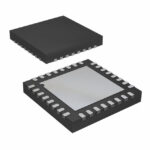 AD8392AACPZ-RL
The activity of extra discounts on wholesale prices is in full swing…
Please fill in your contact information and we will send you the latest wholesale price list.





