 ChipApex | Global Electronic Components Supplier
SEARCH
Search Product
Search Post
— IC芯片 | 连接器 | 传感器 | 被动器件 —
Search productSearch post
— IC芯片 | 连接器 | 传感器 | 被动器件 —
Consult the customer manager about the wholesale price.
consultation hotline:86-132-6715-2157
email:[email protected]
Contact the product manager for consultation. One-stop consultation is available.
Do you want a lower wholesale price? Please send us your inquiry and we will reply immediately.
The AD8497ARMZ is a precision K-type thermocouple amplifier with integrated cold junction compensation, housed in an 8-lead MSOP package. It delivers a linear 5 mV/°C output voltage directly proportional to the measurement junction temperature. The device operates on a single supply ranging from 2.7 V to 36 V or dual supplies of ±2.7 V to ±18 V. It features a quiescent current of 180 μA and supports a bandwidth of 25 kHz. Initial accuracy is specified at ±1°C (Grade C) or ±3°C (Grade A), with ambient temperature rejection of 0.025°C/°C.
Verify the specific grade (A or C) required for initial accuracy specifications. Confirm that the operating environment aligns with the AD8497's optimized ambient range of 25°C to 100°C. Ensure the reference junction is physically close to the device to maintain compensation accuracy. Check datasheet limits for supply voltage and input common-mode ranges before integration.
Select the AD8497 specifically for K-type thermocouples requiring operation in elevated ambient environments. Compare against AD8495 if the application operates in standard laboratory conditions near 25°C. Consider the fixed gain architecture which simplifies design but limits flexibility compared to programmable amplifiers. Verify power supply constraints against the wide input voltage range capabilities.
The AD8497 is part of the AD8494/AD8495/AD8496/AD8497 family of precision thermocouple signal conditioners. While sharing the same package and core architecture, it is distinctively laser-trimmed for K-type thermocouples and optimized for higher ambient temperatures than the AD8495. This differentiation ensures accurate cold junction compensation in industrial settings like ovens or automotive exhaust systems.
The AD8495ARMZ serves as a functional substitute for K-type applications but is optimized for lower ambient temperatures (0°C to 50°C). Substitution requires verification that the ambient temperature range meets the AD8495 specifications. No other direct replacements are documented in the provided source material.
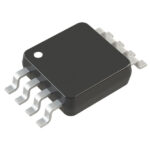 AD8497ARMZ
The activity of extra discounts on wholesale prices is in full swing…
Please fill in your contact information and we will send you the latest wholesale price list.





