 ChipApex | Global Electronic Components Supplier

SEARCH
Search Product
Search Post
— IC芯片 | 连接器 | 传感器 | 被动器件 —
Search productSearch post
— IC芯片 | 连接器 | 传感器 | 被动器件 —
Consult the customer manager about the wholesale price.
consultation hotline:86-132-6715-2157
email:[email protected]
Contact the product manager for consultation. One-stop consultation is available.
Do you want a lower wholesale price? Please send us your inquiry and we will reply immediately.
The AD9272BSVZRL-40 is an octal analog-to-digital converter (ADC) integrated with low noise preamplifiers (LNA), variable gain amplifiers (VGA), and antialiasing filters (AAF). It features a 12-bit resolution with a sampling rate of up to 40 MSPS. Each channel provides a full time gain control path, including an LNA with selectable gains of 15.6 dB, 17.9 dB, or 21.3 dB, and a VGA with a 42 dB attenuation range. The device includes an 8 × 8 differential crosspoint switch for continuous wave Doppler applications. It outputs serial LVDS data with frame and data clocks, operates on 1.8 V and 3.0 V supplies, and consumes 195 mW per channel at 40 MSPS in the standard TGC mode.
Verify the specific suffix RL indicates reel packaging when sourcing components. Confirm that the -40 speed grade matches the required maximum sampling frequency of 40 MSPS for the target design. Ensure supply chain sources provide original manufacturer documentation to validate RoHS compliance and industrial temperature range specifications (-40°C to +85°C).
Select this component when system requirements demand eight independent signal chains with integrated front-end conditioning. The -40 variant is appropriate for applications requiring sampling rates up to 40 MSPS; higher speed grades are available if greater throughput is needed. Consider the power consumption profile, as the device draws 195 mW per channel in full operation but supports flexible power-down modes for battery-powered portability.
This part belongs to the AD9272 family of octal ultrasound ADCs. Other variants include the AD9272BSVZ-65 and AD9272BSVZ-80, which support sampling rates up to 65 MSPS and 80 MSPS respectively. All variants share the same pinout and functional block diagram, differing primarily in their specified maximum clock rates and associated AC performance metrics.
Direct replacements within the same package and functionality include the AD9272BSVZ-65 and AD9272BSVZ-80. These parts offer higher sampling speeds but maintain identical pin configurations and software compatibility via the SPI interface.
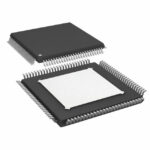 AD9272BSVZRL-40

The activity of extra discounts on wholesale prices is in full swing…
Please fill in your contact information and we will send you the latest wholesale price list.





