 ChipApex | Global Electronic Components Supplier

SEARCH
Search Product
Search Post
— IC芯片 | 连接器 | 传感器 | 被动器件 —
Search productSearch post
— IC芯片 | 连接器 | 传感器 | 被动器件 —
Consult the customer manager about the wholesale price.
consultation hotline:86-132-6715-2157
email:[email protected]
Contact the product manager for consultation. One-stop consultation is available.
Do you want a lower wholesale price? Please send us your inquiry and we will reply immediately.
The AD9273BSVZ-25 is an octal analog front-end integrated circuit from Analog Devices, combining a low noise preamplifier (LNA), variable gain amplifier (VGA), antialiasing filter (AAF), and 12-bit analog-to-digital converter (ADC) in a single package. It features eight independent channels operating at sampling rates up to 25 MSPS. Key electrical specifications include an input-referred noise voltage of 1.26 nV/√Hz at 21.3 dB LNA gain, a signal-to-noise ratio (SNR) of 65.5 dB at 5 MHz input frequency, and a total power dissipation of 940 mW. The device utilizes serial LVDS outputs and supports SPI configuration.
Verify component authenticity through authorized distributors or direct manufacturer channels. Confirm RoHS compliance status and check for specific ordering suffixes that may indicate package variations or temperature ranges. Ensure supply chain documentation matches the AD9273BSVZ-25 designation.
Select the AD9273BSVZ-25 variant specifically for 25 MSPS operation speeds. Consider the 100-lead TQFP package for surface mount assembly. Evaluate power consumption requirements, as full-channel mode dissipates approximately 940 mW. Ensure system clock inputs support CMOS, LVDS, or LVPECL logic levels for optimal performance.
This component belongs to the AD9273 family of octal LNAs/VGAs/AAFs/ADCs. Other variants in the series include speed grades optimized for 40 MSPS and 50 MSPS operations. The device is fabricated using an advanced CMOS process and is designed for high integration in compact form factors.
Direct replacements within the same family include the AD9273BSVZ-40 and AD9273BSVZ-50, which offer higher sampling rates but require verification of timing constraints and power budgets.
The AD9273BSVZ-25 is specified for a maximum sampling rate of 25 MSPS.
Gain is controlled via the GAIN+ pin, which allows for a 42 dB range with linear-in-dB characteristics, or through the SPI interface for digital programming.
The ADC uses a serial LVDS interface compliant with ANSI-644 standards, providing data and frame clock outputs.
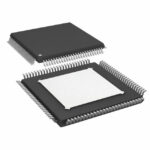 AD9273BSVZ-25

The activity of extra discounts on wholesale prices is in full swing…
Please fill in your contact information and we will send you the latest wholesale price list.





