 ChipApex | Global Electronic Components Supplier
SEARCH
Search Product
Search Post
— IC芯片 | 连接器 | 传感器 | 被动器件 —
Search productSearch post
— IC芯片 | 连接器 | 传感器 | 被动器件 —
Consult the customer manager about the wholesale price.
consultation hotline:86-132-6715-2157
email:[email protected]
Contact the product manager for consultation. One-stop consultation is available.
Do you want a lower wholesale price? Please send us your inquiry and we will reply immediately.
The AD9508SCPZ-EP-R7 is a 1.2 GHz clock fanout buffer with output dividers and delay adjustment, designed for enhanced product applications supporting defense and aerospace environments. It features four independent differential outputs or eight single-ended CMOS outputs, each equipped with a 10-bit programmable divider (1 to 1024). The device operates on a single 2.5 V supply (2.375 V to 2.625 V) within an extended temperature range of −55°C to +105°C. Key electrical specifications include <115 fs rms broadband random jitter and 41 fs typical additive output jitter (12 kHz to 20 MHz). It supports LVDS, HSTL, and CMOS logic levels via SPI/I2C or pin programming in a 24-lead LFCSP package.
Verify the specific suffix -R7 indicates tape and reel packaging configuration. Confirm that the Enhanced Product (EP) designation meets the required AQEC standard documentation and controlled manufacturing baseline requirements for the target application. Ensure the 24-LFCSP exposed pad is properly soldered to ground for thermal performance.
Select this component when operating temperatures extend below −40°C or above +85°C, as it supports −55°C to +105°C. Choose based on the need for integrated division ratios up to 1024 per channel and the requirement for simultaneous synchronization of all outputs. Verify power supply constraints align with the single 2.5 V operation and internal LDO decoupling requirements.
This part belongs to the AD9508-EP family of enhanced product clock buffers. It shares functional similarities with the commercial AD9508 but differs in qualification standards, temperature range, and manufacturing controls. The EP variant is specifically tailored for reliability-critical sectors such as aerospace and defense, offering controlled change notifications and single-site fabrication.
The commercial AD9508BCPZ or AD9508SCPZ variants offer identical electrical functionality but lack the enhanced product qualification and extended temperature range. Substitution requires verification that the application does not mandate AQEC compliance or the −55°C to +105°C operating window.
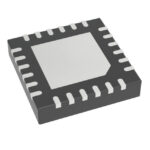 AD9508SCPZ-EP-R7
The activity of extra discounts on wholesale prices is in full swing…
Please fill in your contact information and we will send you the latest wholesale price list.




