ChipApex | Global Electronic Components Supplier
SEARCH
Search Product
Search Post
— IC芯片 | 连接器 | 传感器 | 被动器件 —
Search productSearch post
— IC芯片 | 连接器 | 传感器 | 被动器件 —
Consult the customer manager about the wholesale price.
consultation hotline:86-132-6715-2157
email:[email protected]
Contact the product manager for consultation. One-stop consultation is available.
Do you want a lower wholesale price? Please send us your inquiry and we will reply immediately.
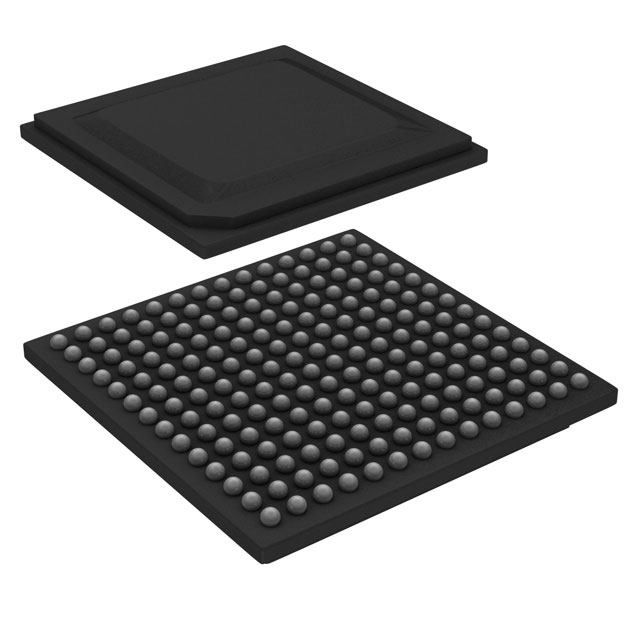
The AD9689BBPZRL-2600 is a dual-channel, 14-bit analog-to-digital converter (ADC) operating at sampling rates up to 2.6 GSPS. It features a multistage differential pipelined architecture with integrated output error correction logic and on-chip buffers. The device supports direct RF sampling of signals up to 5 GHz, utilizing a 9 GHz analog input bandwidth. Digital outputs are provided via JESD204B Subclass 1 interfaces supporting lane rates up to 16 Gbps per lane. Each channel includes four digital downconverters (DDCs) with 48-bit numerically controlled oscillators (NCOs). Power consumption is 3.1 W total in default mode. It operates from 0.975 V, 1.9 V, and 2.5 V supplies within a -40°C to +85°C temperature range.
Verify the specific ordering suffix RL indicates reel packaging configuration against official Analog Devices documentation before procurement. Confirm that the component matches the required pinout and thermal specifications for the target PCB layout. Ensure all supply voltage rails meet the specified tolerance ranges during validation testing.
Select this component when high-speed direct RF sampling is required for wideband applications. Evaluate the power dissipation requirements against available cooling solutions, as the device consumes significant power at maximum sampling rates. Verify compatibility with the receiving logic device's JESD204B lane rate capabilities and determine if the integrated DDC functionality meets system processing needs.
This part belongs to the AD9689 family of high-performance ADCs designed for communications and instrumentation. It shares pinout and memory map compatibility with the AD9208. The BBPZ designation identifies the lead-free BGA package variant, while the RL suffix specifies tape and reel delivery. It serves as a core digitization element in modern software-defined radio architectures.
The AD9689BBPZ-2600 is the tray-packaged equivalent of this component. Both variants share identical electrical characteristics and pinouts. Verify that the replacement option meets the specific packaging quantity requirements of the manufacturing assembly line.
 AD9689BBPZRL-2600
The activity of extra discounts on wholesale prices is in full swing…
Please fill in your contact information and we will send you the latest wholesale price list.