 ChipApex | Global Electronic Components Supplier
SEARCH
Search Product
Search Post
— IC芯片 | 连接器 | 传感器 | 被动器件 —
Search productSearch post
— IC芯片 | 连接器 | 传感器 | 被动器件 —
Consult the customer manager about the wholesale price.
consultation hotline:86-132-6715-2157
email:[email protected]
Contact the product manager for consultation. One-stop consultation is available.
Do you want a lower wholesale price? Please send us your inquiry and we will reply immediately.
The AD974BNZ is a four-channel, 16-bit data acquisition system (DAS) manufactured by Analog Devices Inc. It integrates a high-speed successive approximation register (SAR) analog-to-digital converter with four single-ended analog input channels and a multiplexer. The device operates on a single +5 V supply and supports serial digital interfaces for data output. Key electrical specifications include a throughput rate of 200 kSPS per channel, a maximum power dissipation of 120 mW, and an internal or external 2.5 V reference option. It features a power-down mode to minimize energy consumption during idle periods.
Verify component authenticity through authorized distribution channels due to the presence of obsolete or legacy variants in the market. Confirm package integrity upon receipt, as the PDIP-28 housing may be subject to handling wear if sourced from secondary markets. Ensure compliance with current environmental regulations such as RoHS standards before integration into final assemblies.
Select the AD974BNZ when a multi-channel solution is preferred over discrete ADCs to reduce board space and design complexity. Consider the 200 kSPS limit for bandwidth requirements; higher speeds require alternative families. Verify that the single-ended input range matches the sensor output levels, as differential inputs are not supported natively without external circuitry.
The AD974BNZ belongs to the AD974 family of data acquisition systems, which includes variants like the AD974BRZ (SOIC package) and AD974ARS (SSOP package). This specific part number denotes the through-hole PDIP-28 packaging variant. It serves as a consolidated solution for applications needing multiple analog inputs processed by a single controller, simplifying the signal chain compared to using separate ADCs for each channel.
Direct pin-compatible replacements within the same package type are limited due to the specific integration of the multiplexer and SAR core. Evaluate the AD974BRZ for surface-mount applications if PCB layout allows. For modern designs, consider newer Analog Devices DAS families with higher speeds or integrated programmable gain amplifiers.
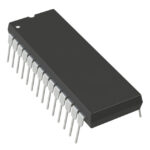 AD974BNZ
The activity of extra discounts on wholesale prices is in full swing…
Please fill in your contact information and we will send you the latest wholesale price list.





