 ChipApex | Global Electronic Components Supplier
SEARCH
Search Product
Search Post
— IC芯片 | 连接器 | 传感器 | 被动器件 —
Search productSearch post
— IC芯片 | 连接器 | 传感器 | 被动器件 —
Consult the customer manager about the wholesale price.
consultation hotline:86-132-6715-2157
email:[email protected]
Contact the product manager for consultation. One-stop consultation is available.
Do you want a lower wholesale price? Please send us your inquiry and we will reply immediately.
The AD9806KSTZ is a complete analog signal processor for CCD applications, featuring an 18 MHz single-channel architecture designed to sample and condition outputs of interlaced and progressive scan area CCD arrays. The signal chain includes an input clamp, correlated double sampler (CDS), digitally programmable gain amplifier (PGA), black level clamp, and a 10-bit A/D converter. It operates from a single 3 V supply with typical power consumption of 75 mW at 3.0 V or 65 mW at 2.7 V. The device provides a 3-wire serial interface for digital control of gain, black level, input configuration, and power-down modes. It is housed in a 48-lead LQFP package and rated for operation between –20°C and +85°C.
Verify the specific suffix KSTZ corresponds to the –20°C to +85°C operating temperature range and the ST-48 thin plastic quad flatpack package option as listed in the ordering guide. Confirm that the component meets ESD sensitivity precautions during handling, as high-energy discharges may cause permanent damage despite internal protection circuitry.
Select this component when interfacing with interlaced or progressive scan CCD arrays requiring a single-channel solution. Ensure the design accommodates the 18 MHz maximum clock rate and the 3 V single-supply requirement. Consider the pin compatibility with AD9803 if migrating existing designs, noting differences in NC pins and bypass connections.
The AD9806 serves as a specialized signal processor within Analog Devices' portfolio for imaging applications. It integrates functions typically requiring multiple discrete components into a single chip, reducing board space and complexity. The KSTZ variant specifically denotes the industrial temperature range and LQFP packaging suitable for surface-mount assembly in consumer electronics.
The AD9803 is pin-compatible but lacks some advanced features like the auxiliary DACs and higher performance CDS. Verify functional requirements against the AD9806 specifications before substituting, as direct pin-for-pin replacement may not provide equivalent signal conditioning capabilities.
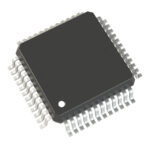 AD9806KSTZ
The activity of extra discounts on wholesale prices is in full swing…
Please fill in your contact information and we will send you the latest wholesale price list.





