 ChipApex | Global Electronic Components Supplier
SEARCH
Search Product
Search Post
— IC芯片 | 连接器 | 传感器 | 被动器件 —
Search productSearch post
— IC芯片 | 连接器 | 传感器 | 被动器件 —
Consult the customer manager about the wholesale price.
consultation hotline:86-132-6715-2157
email:[email protected]
Contact the product manager for consultation. One-stop consultation is available.
Do you want a lower wholesale price? Please send us your inquiry and we will reply immediately.
The AD9837ACPZ-RL is a low-power, programmable waveform generator from Analog Devices. It produces sine, triangular, and square wave outputs with digitally programmable frequency and phase. The device features a 28-bit frequency register providing 0.06 Hz resolution at a 16 MHz clock rate. It operates on a single 2.3 V to 5.5 V supply with 8.5 mW power consumption at 2.3 V. The component utilizes a 3-wire SPI interface compatible with DSP standards and includes power-down options. It is housed in a 10-lead LFCSP package and supports an extended temperature range of −40°C to +125°C.
Verify the specific grade suffix when ordering, as the A-grade variant specifies a maximum master clock speed of 5 MHz, whereas the B-grade supports 16 MHz. Confirm that the LFCSP_WD package requires appropriate thermal management during soldering. Ensure the design accounts for the humidity sensitivity level indicated in the datasheet to prevent moisture-related damage during assembly.
Select this component for applications requiring precise frequency tuning with minimal power usage. The 28-bit resolution allows for fine frequency steps, suitable for high-precision signal generation. Consider the operating voltage range and ensure the external clock source matches the required grade specifications. The integrated DAC simplifies analog front-end design by reducing the need for external amplification or filtering components.
This part belongs to the AD9837 family of direct digital synthesis (DDS) waveform generators. It shares functional similarities with the AD9833 and AD9834 but offers specific performance characteristics tailored for low-power embedded systems. The ACPZ-RL designation indicates the commercial temperature grade and reel packaging format used for surface-mount assembly.
The AD9837BCPZ-RL is a pin-compatible alternative offering higher clock speeds up to 16 MHz. Engineers should verify if the increased bandwidth is necessary for their application. Other DDS devices from Analog Devices may require significant schematic and firmware modifications due to differences in register maps and interface protocols.
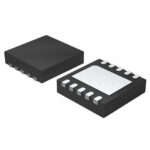 AD9837ACPZ-RL
The activity of extra discounts on wholesale prices is in full swing…
Please fill in your contact information and we will send you the latest wholesale price list.





