 ChipApex | Global Electronic Components Supplier
SEARCH
Search Product
Search Post
— IC芯片 | 连接器 | 传感器 | 被动器件 —
Search productSearch post
— IC芯片 | 连接器 | 传感器 | 被动器件 —
Consult the customer manager about the wholesale price.
consultation hotline:86-132-6715-2157
email:[email protected]
Contact the product manager for consultation. One-stop consultation is available.
Do you want a lower wholesale price? Please send us your inquiry and we will reply immediately.
The AD9852ASTZ is a CMOS digital synthesizer featuring a 300 MHz internal clock rate and dual integrated 12-bit D/A converters. It supports FSK, BPSK, PSK, chirp, and AM operations with an ultrahigh-speed comparator exhibiting 3 ps rms jitter. The device provides excellent dynamic performance, achieving 80 dB SFDR at 100 MHz output. It includes a 4× to 20× programmable reference clock multiplier, dual 48-bit frequency registers, and dual 14-bit phase offset registers. Control interfaces include a 10 MHz serial SPI-compatible port or 100 MHz parallel programming. The component operates on a single 3.3 V supply within the extended industrial temperature range of −40°C to +85°C.
Verify the specific suffix 'AST' against the manufacturer's current ordering guide to confirm package type and temperature rating. Ensure the design accounts for thermal dissipation requirements associated with the LQFP or TQFP package options. Confirm that the selected variant matches the required maximum clock frequency specifications for the intended application environment.
Select the AD9852ASTZ when a maximum internal clock frequency of 200 MHz is sufficient, as opposed to the 300 MHz capability of the ASVZ variant. Evaluate the need for differential versus single-ended reference clock inputs based on system noise requirements. Consider the power consumption profiles across different functional configurations to ensure compliance with thermal constraints in the final enclosure design.
The AD9852 is pin-for-pin compatible with the AD9854 single-tone synthesizer, facilitating direct upgrades or design modifications between the two devices. It utilizes advanced 0.35 μm CMOS technology to integrate complex DDS functionality onto a single chip. The device serves as a complete digitally programmable synthesizer solution, replacing discrete frequency synthesis components in modern RF designs.
The AD9852ASVZ is a confirmed substitute offering a higher maximum clock frequency of 300 MHz compared to the 200 MHz limit of the ASTZ variant. Both parts share identical pinouts and functional compatibility. Designers must verify that the increased clock speed capabilities align with their thermal management and power supply requirements.
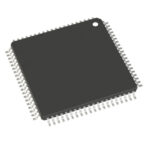 AD9852AST
The activity of extra discounts on wholesale prices is in full swing…
Please fill in your contact information and we will send you the latest wholesale price list.





