 ChipApex | Global Electronic Components Supplier
SEARCH
Search Product
Search Post
— IC芯片 | 连接器 | 传感器 | 被动器件 —
Search productSearch post
— IC芯片 | 连接器 | 传感器 | 被动器件 —
Consult the customer manager about the wholesale price.
consultation hotline:86-132-6715-2157
email:[email protected]
Contact the product manager for consultation. One-stop consultation is available.
Do you want a lower wholesale price? Please send us your inquiry and we will reply immediately.
The AD9959BCPZ is a four-channel direct digital synthesizer (DDS) integrated circuit manufactured by Analog Devices Inc. It operates with a maximum sampling rate of 500 MSPS and incorporates four high-speed 10-bit digital-to-analog converters (DACs). The device provides independent frequency, phase, and amplitude control for each channel, utilizing a common system clock to ensure inherent synchronization. Key electrical parameters include a supply voltage range of 1.71 V to 1.96 V for the DDS core and 3.3 V for the serial I/O interface. It supports a reference clock input range of 1 MHz to 500 MHz when the multiplier is bypassed, or 10 MHz to 125 MHz when enabled. The component features a 56-lead LFCSP-VQ package and operates within an industrial temperature range of -40°C to +85°C.
Verify the specific ordering suffix against official documentation to confirm packaging type and reel specifications. Ensure compatibility with the required operating temperature range and power supply voltages before integration. Confirm that the selected variant meets all environmental compliance standards relevant to the target deployment region.
Select this component when multi-channel synchronization and independent waveform control are required. Evaluate the need for internal PLL multiplication versus external clocking based on jitter performance requirements. Consider the 56-lead LFCSP package constraints for PCB layout and thermal management during the design phase.
The AD9959 belongs to the Analog Devices DDS product family designed for high-performance signal generation. It shares architectural similarities with other multi-channel synthesizers but distinguishes itself through integrated DACs and flexible modulation capabilities. The BC prefix typically denotes the industrial temperature grade variant within the broader AD9959 series.
Direct pin-compatible replacements should be verified against the manufacturer's current obsolescence notices. Alternative devices must match the 500 MSPS sampling rate and 56-lead LFCSP footprint to ensure mechanical interchangeability without redesigning the PCB layout.
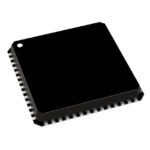 AD9959BCPZ
The activity of extra discounts on wholesale prices is in full swing…
Please fill in your contact information and we will send you the latest wholesale price list.





