 ChipApex | Global Electronic Components Supplier
SEARCH
Search Product
Search Post
— IC芯片 | 连接器 | 传感器 | 被动器件 —
Search productSearch post
— IC芯片 | 连接器 | 传感器 | 被动器件 —
Consult the customer manager about the wholesale price.
consultation hotline:86-132-6715-2157
email:[email protected]
Contact the product manager for consultation. One-stop consultation is available.
Do you want a lower wholesale price? Please send us your inquiry and we will reply immediately.
The ADA4930-2YCPZ-RL is a dual-channel, ultralow noise differential amplifier designed for driving low-voltage analog-to-digital converters (ADCs). It operates on single supplies of 3.3 V or 5 V and features a 24-lead LFCSP package. Key electrical parameters include a small-signal bandwidth of 1350 MHz at G=1, a slew rate of 3400 V/μs, and an input voltage noise of 1.2 nV/√Hz. The device offers adjustable output common-mode voltage, extremely low harmonic distortion (−73 dBc HD2 at 100 MHz), and fast overdrive recovery of 1.5 ns.
Verify the specific suffix 'RL' indicates reel packaging when sourcing. Confirm the 24-lead LFCSP package dimensions match the PCB footprint. Ensure the operating temperature range of −40°C to +105°C meets system requirements. Check for RoHS compliance status in the latest datasheet revision.
Select this component for applications requiring high-speed signal conversion with minimal noise addition. The dual-channel architecture supports independent processing paths. Consider the 3400 V/μs slew rate for large-signal performance. Evaluate thermal dissipation capabilities given the 67 °C/W junction-to-ambient resistance in the 24-lead package.
This part belongs to the ADA4930 family of ultralow noise drivers for low-voltage ADCs. The ADA4930-2 variant specifically provides two independent channels in a compact 4 mm × 4 mm footprint. It complements the single-channel ADA4930-1, offering higher integration density for multi-channel data acquisition systems.
ADA4930-2YCPZ-R2 is a direct pin-compatible alternative within the same series. Verify that any substitute maintains the 24-lead LFCSP package and similar electrical specifications for bandwidth and noise performance.
The output common-mode voltage is set by applying a voltage to the VOCM pin. An internal common-mode feedback loop forces the output common-mode level to match the voltage applied to this pin.
The typical input offset voltage is 0.5 mV, with a maximum specified drift of 2.75 μV/°C across the operating temperature range.
Yes, the ADA4930-2 supports single-ended-to-differential operation, converting a single-ended input signal into a balanced differential output suitable for ADC driving.
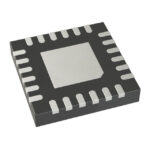 ADA4930-2YCPZ-RL
The activity of extra discounts on wholesale prices is in full swing…
Please fill in your contact information and we will send you the latest wholesale price list.






