 ChipApex | Global Electronic Components Supplier
SEARCH
Search Product
Search Post
— IC芯片 | 连接器 | 传感器 | 被动器件 —
Search productSearch post
— IC芯片 | 连接器 | 传感器 | 被动器件 —
Consult the customer manager about the wholesale price.
consultation hotline:86-132-6715-2157
email:[email protected]
Contact the product manager for consultation. One-stop consultation is available.
Do you want a lower wholesale price? Please send us your inquiry and we will reply immediately.
The ADA4932-2YCPZ-R2 is a dual-channel, low-power differential ADC driver manufactured by Analog Devices Inc. It features a −3 dB bandwidth of 560 MHz at G = 1 and a slew rate of 2800 V/µs. The device operates on supplies between +3 V and ±5 V with a quiescent current of 9.6 mA per amplifier. It provides 100 dB SFDR at 10 MHz and utilizes an internal common-mode feedback loop for output balance. Packaged in a 24-lead LFCSP, it supports single-ended-to-differential or differential-to-differential conversion.
Verify the specific ordering suffix matches the required package type and reel configuration. Confirm the component meets the specified operating temperature range of −40°C to +105°C. Ensure the supply voltage requirements align with the system design constraints. Check for any revision history updates that may affect pinout or electrical specifications before final integration.
Select this component when driving high-performance ADCs requires low power consumption alongside high-speed signal processing capabilities. The dual-channel architecture is suitable for applications needing two independent differential outputs. Consider the external resistor tolerance impact on gain accuracy and the thermal resistance characteristics for PCB layout optimization to ensure reliable operation within the specified junction temperature limits.
The ADA4932-2 serves as the dual-channel counterpart to the ADA4932-1, succeeding the AD8132 series. It offers improved performance metrics including higher bandwidth and lower noise while maintaining a compact footprint. The device is designed for data acquisition and signal processing applications where dynamic performance and low power are critical.
The ADA4932-2 is the direct successor to the AD8132. Verify pin compatibility and electrical parameter improvements when transitioning from legacy parts. No other public confirmed substitute part numbers are available for this specific model.
The internal common-mode feedback loop forces the outputs to remain balanced over a wide frequency range, ensuring signals are identical in amplitude and exactly 180° apart in phase without relying on external component matching.
The maximum junction temperature is 150°C. Exceeding this limit can permanently shift parametric performance due to changes in the plastic package properties at its glass transition temperature.
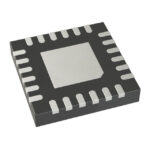 ADA4932-2YCPZ-R2
The activity of extra discounts on wholesale prices is in full swing…
Please fill in your contact information and we will send you the latest wholesale price list.






