 ChipApex | Global Electronic Components Supplier

SEARCH
Search Product
Search Post
— IC芯片 | 连接器 | 传感器 | 被动器件 —
Search productSearch post
— IC芯片 | 连接器 | 传感器 | 被动器件 —
Consult the customer manager about the wholesale price.
consultation hotline:86-132-6715-2157
email:[email protected]
Contact the product manager for consultation. One-stop consultation is available.
Do you want a lower wholesale price? Please send us your inquiry and we will reply immediately.
The ADA4938-2ACPZ-RL is a dual-channel ultralow distortion differential ADC driver manufactured by Analog Devices Inc. It features a 1000 MHz small-signal bandwidth, 4700 V/µs slew rate, and 2.6 nV/√Hz input voltage noise. The device operates on supply voltages ranging from +5 V to ±5 V with a quiescent current of 37 mA per amplifier. It provides adjustable output common-mode voltage and supports gains via external resistors. Packaged in a 24-lead LFCSP-WQ (4 mm × 4 mm) with an exposed pad, it functions within the -40°C to +85°C industrial temperature range.
Verify the specific package marking and lot date code against the manufacturer's latest documentation to ensure authenticity. Confirm that the ordering suffix matches the required reel quantity and tape specifications. Check for any recent engineering change notices (ECNs) or pinout revisions that may affect board compatibility. Ensure ESD handling protocols are followed during assembly due to the sensitivity of the CMOS internal circuitry.
Select this component when driving high-resolution ADCs requiring low noise and wide dynamic range. The dual configuration reduces board space compared to using two single amplifiers. Verify that the required gain and load conditions fall within the linear output current limits. Consider the thermal resistance of the 24-lead LFCSP package for adequate heat dissipation in dense layouts.
This part belongs to the ADA4938 family of differential amplifiers fabricated using Analog Devices' third-generation high-voltage XFCB process. The family includes the single-channel ADA4938-1 and the dual-channel ADA4938-2. These devices are designed to replace older discrete solutions or standard op amps in applications demanding superior linearity and speed.
The ADA4938-1ACPZ-RL serves as the single-channel equivalent within the same series. For dual-channel requirements, verify pinout compatibility if substituting with other ADI differential drivers like the ADA4940-2, though functional differences exist.
It provides exceptional output balance and suppresses even-order harmonic distortion products, which is critical for maintaining signal integrity in high-performance data acquisition systems.
The exposed pad is not electrically connected to the device but is typically soldered to ground or a power plane on the PCB to provide thermal conductivity and mechanical stability.
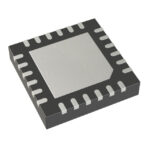 ADA4938-2ACPZ-RL

The activity of extra discounts on wholesale prices is in full swing…
Please fill in your contact information and we will send you the latest wholesale price list.





