 ChipApex | Global Electronic Components Supplier

SEARCH
Search Product
Search Post
— IC芯片 | 连接器 | 传感器 | 被动器件 —
Search productSearch post
— IC芯片 | 连接器 | 传感器 | 被动器件 —
Consult the customer manager about the wholesale price.
consultation hotline:86-132-6715-2157
email:[email protected]
Contact the product manager for consultation. One-stop consultation is available.
Do you want a lower wholesale price? Please send us your inquiry and we will reply immediately.
The ADA4960-1ACPZ-RL is a high-performance, single-supply differential amplifier optimized for RF and IF applications. It features a 5 GHz bandwidth at 6 dB gain, 8700 V/µs slew rate, and programmable gain from 0 dB to 18 dB via a single resistor. The device maintains a constant 10 kΩ input impedance and includes a nominal 150 Ω output impedance. Operating on a 5 V supply with 60 mA quiescent current, it delivers low distortion (IMD3 -63 dBc at 1 GHz) and fast overdrive recovery.
Verify the specific ordering suffix matches the required reel quantity and tape-and-reel specifications. Confirm that the LFCSP package dimensions align with your PCB footprint requirements. Ensure thermal management strategies account for the junction temperature limits under maximum ambient operating conditions. Validate that the 5 V single-supply voltage range meets your system power constraints before finalizing procurement.
Select this component when driving high-speed ADCs requiring low distortion and wide bandwidth. Consider the fixed 10 kΩ input impedance for source matching requirements. Evaluate the 150 Ω output impedance against load requirements to ensure proper signal integrity. Verify that the 5 V supply capability fits within your available power rails and that the thermal dissipation characteristics suit your enclosure design.
This part belongs to Analog Devices' family of high-speed differential amplifiers designed for RF and IF processing. It utilizes a SiGe process to achieve superior speed and linearity compared to standard bipolar technologies. The 16-lead LFCSP package provides a compact solution for space-constrained designs while maintaining thermal performance through an exposed pad connection.
Check for direct cross-reference part numbers in Analog Devices' portfolio that offer similar bandwidth and gain configurations. Verify compatibility with existing PCB footprints if substituting packages. Ensure replacement devices support the same 5 V single-supply operation and maintain comparable IMD3 performance levels at target frequencies.
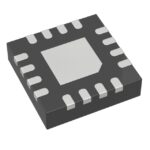 ADA4960-1ACPZ-RL

The activity of extra discounts on wholesale prices is in full swing…
Please fill in your contact information and we will send you the latest wholesale price list.





