 ChipApex | Global Electronic Components Supplier
SEARCH
Search Product
Search Post
— IC芯片 | 连接器 | 传感器 | 被动器件 —
Search productSearch post
— IC芯片 | 连接器 | 传感器 | 被动器件 —
Consult the customer manager about the wholesale price.
consultation hotline:86-132-6715-2157
email:[email protected]
Contact the product manager for consultation. One-stop consultation is available.
Do you want a lower wholesale price? Please send us your inquiry and we will reply immediately.
The ADAS1000-4BSTZ is a low-power, three-electrode electrocardiogram (ECG) analog front end from Analog Devices. It integrates three acquisition channels and one driven lead, supporting AC and DC lead-off detection. The device features an internal pace detection algorithm on all three leads and includes thoracic impedance measurement capabilities for respiration monitoring. Power consumption scales with performance, reaching 15 mW in high-performance mode with three leads active. It operates over a temperature range of −40°C to +85°C and is available in 56-lead LFCSP or 64-lead LQFP packages.
Verify the BSTZ suffix against the manufacturer's current ordering guide to confirm package type and tape/reel specifications. Ensure compatibility with system voltage requirements, specifically AVDD at 3.3 V ± 5% and IOVDD between 1.65 V and 3.6 V. Confirm thermal management strategies for the selected package option within the specified operating temperature range.
Select the ADAS1000-4BSTZ when three-channel ECG data combined with respiration and pace detection is required. Choose this model over the ADAS1000-3 if internal pace detection and thoracic impedance measurements are necessary. Consider the 56-lead LFCSP for space-constrained designs or the 64-lead LQFP for easier prototyping. Verify that the application benefits from the integrated RLD and shield driver functions.
The ADAS1000-4 is part of the ADAS1000 series, designed to simplify biopotential signal acquisition. It complements companion devices like the ADAS1000-2 for expanded channel counts. The series targets both portable battery-powered applications and high-end diagnostic equipment by offering configurable performance levels. It outputs digitized signals via a serial interface for external processing.
The ADAS1000-3 is a compatible alternative if respiration and pace detection features are not required. For five-channel configurations, the ADAS1000 or ADAS1000-1 may be used as primary devices, potentially ganged with secondary units. Verify pinout and register compatibility when substituting within the family.
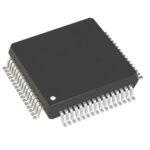 ADAS1000-4BSTZ
The activity of extra discounts on wholesale prices is in full swing…
Please fill in your contact information and we will send you the latest wholesale price list.





