 ChipApex | Global Electronic Components Supplier
SEARCH
Search Product
Search Post
— IC芯片 | 连接器 | 传感器 | 被动器件 —
Search productSearch post
— IC芯片 | 连接器 | 传感器 | 被动器件 —
Consult the customer manager about the wholesale price.
consultation hotline:86-132-6715-2157
email:[email protected]
Contact the product manager for consultation. One-stop consultation is available.
Do you want a lower wholesale price? Please send us your inquiry and we will reply immediately.
The ADAU1592ACPZ-RL is a two-channel, bridge-tied load (BTL) Class-D audio power amplifier manufactured by Analog Devices Inc. It integrates a fifth-order Sigma-Delta modulator and a high-power output stage within an LFCSP-48 package. The device operates from a power supply voltage range of 9 V to 18 V, while the analog and digital logic sections utilize a 3.3 V supply. Key electrical specifications include a total harmonic distortion plus noise (THD+N) of 0.005%, a dynamic range of 101 dB, and a power supply rejection ratio exceeding 65 dB. It delivers up to 18 W into an 8 Ω load at 1% THD+N.
Verify the specific ordering suffix against the manufacturer's current documentation to ensure correct packaging configuration. Confirm that the component meets all applicable environmental compliance standards required for your manufacturing process. Cross-reference the datasheet revision history to ensure compatibility with existing design parameters and pin assignments.
Select this component when designing systems requiring integrated modulation and high-efficiency amplification without external filter components. Consider the available PGA gain options to match the source signal amplitude. Evaluate the thermal dissipation requirements based on the intended load impedance and supply voltage to ensure operation within the specified junction temperature limits.
This part belongs to the ADAU1592 series of switching audio power amplifiers. It is designed for applications demanding high fidelity and efficiency in compact form factors. The integration of the modulator directly with the power stage distinguishes it from traditional PWM amplifiers that require separate driver and modulator stages.
Consult official documentation for confirmed substitute part numbers before implementation.
The output power can be limited using the built-in slicer block. By connecting a resistor from the SLC_TH pin to ground, the user sets a threshold voltage that clips the input signal to the modulator, thereby capping the maximum output power.
It utilizes a fifth-order Sigma-Delta modulator that converts the analog input into a pulse density modulation (PDM) bit stream. This approach avoids distinct sharp peaks found in fixed-frequency PWM, reducing EMI and improving audio quality.
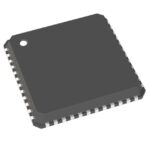 ADAU1592ACPZ-RL
The activity of extra discounts on wholesale prices is in full swing…
Please fill in your contact information and we will send you the latest wholesale price list.






