 ChipApex | Global Electronic Components Supplier
SEARCH
Search Product
Search Post
— IC芯片 | 连接器 | 传感器 | 被动器件 —
Search productSearch post
— IC芯片 | 连接器 | 传感器 | 被动器件 —
Consult the customer manager about the wholesale price.
consultation hotline:86-132-6715-2157
email:[email protected]
Contact the product manager for consultation. One-stop consultation is available.
Do you want a lower wholesale price? Please send us your inquiry and we will reply immediately.
The ADAU1977WBCPZ-RL is a quad analog-to-digital converter (ADC) with integrated diagnostics, designed for automotive audio applications. It features four direct-coupled differential inputs capable of handling 10 V rms line-level signals or connecting directly to electret microphones via a programmable 5 V to 9 V bias. The device utilizes a multibit sigma-delta architecture with a continuous-time front end for low EMI. Key specifications include a 24-bit resolution, 109 dB dynamic range, and -95 dB THD+N. It operates on a single 3.3 V supply, incorporates an on-chip PLL for clock generation, and supports I2C/SPI control interfaces.
Verify the Rev. D datasheet specifications against the specific manufacturing lot. Confirm that the LFCSP-40 package thermal requirements are met in the target design. Ensure the ordering suffix matches the required reel quantity and packaging format for automated assembly processes.
Select this component when high-fidelity multi-channel audio digitization is required alongside built-in sensor diagnostics. The integrated boost converter simplifies power management for microphone arrays. Verify compatibility with the system's digital interface standards, specifically regarding I2C address configuration and SPI timing constraints.
This part belongs to the ADAU1977 family of audio interface devices. It is distinct from other Analog Devices codecs by its focus on input-side diagnostics and direct microphone connectivity without external preamplifiers. The WBCPZ suffix indicates the automotive-grade qualification and LFCSP-40 packaging.
Direct pin-compatible replacements within the same diagnostic-focused quad ADC family should be evaluated based on updated revision specifications. Cross-family substitution requires careful verification of register maps and electrical characteristics.
It includes an internal DC-to-DC boost converter that generates a programmable microphone bias voltage ranging from 5 V to 9 V, eliminating the need for external bias circuits.
The device detects short to battery, short to microphone bias, short to ground, short between positive and negative input pins, and open input terminals, reporting them via an IRQ flag.
The full-scale differential input voltage is 10 V rms for line input applications, allowing direct connection to high-level audio sources.
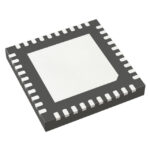 ADAU1977WBCPZ-RL
The activity of extra discounts on wholesale prices is in full swing…
Please fill in your contact information and we will send you the latest wholesale price list.







