 ChipApex | Global Electronic Components Supplier
SEARCH
Search Product
Search Post
— IC芯片 | 连接器 | 传感器 | 被动器件 —
Search productSearch post
— IC芯片 | 连接器 | 传感器 | 被动器件 —
Consult the customer manager about the wholesale price.
consultation hotline:86-132-6715-2157
email:[email protected]
Contact the product manager for consultation. One-stop consultation is available.
Do you want a lower wholesale price? Please send us your inquiry and we will reply immediately.
The ADBF532WYBCZ406 is a Blackfin processor from Analog Devices Inc., operating at a maximum clock frequency of 400 MHz. It features a 16-bit data bus width and utilizes a 160-CSPBGA (12x12) package with SMD/SMT installation style. The device includes 84 kB of program memory, 32 kB of data RAM, 48 kB L1 cache instruction memory, and 32 kB L1 cache data memory. It operates on a 1.2 V supply voltage with I/O voltages of 1.8 V and 3.3 V. The component supports four timers/counters and sixteen I/O lines, functioning within a temperature range of -40°C to +85°C.
Verify the specific package variant and revision level against official Analog Devices documentation before integration. Confirm that the 160-CSPBGA footprint matches your PCB design constraints. Ensure thermal management strategies align with the specified operating temperature range of -40°C to +85°C. Cross-reference the part number suffixes to confirm compatibility with existing system voltage levels and interface requirements.
Select this component when a fixed-point DSP with a 400 MHz Blackfin core is required. Consider the 160-CSPBGA package size for board space limitations. Evaluate the 1.2 V core voltage and 1.8/3.3 V I/O levels for power budgeting. Compare memory capacities against application algorithm complexity to ensure sufficient L1 cache and SRAM availability for efficient execution.
This model belongs to the ADSP-BF532 series within the Blackfin family. It shares architectural similarities with other Blackfin processors but differs in memory configuration and package type. The series is designed for embedded applications needing low power consumption alongside high computational throughput. Understanding the broader family context helps in identifying compatible development tools and software libraries provided by Analog Devices.
Public confirmed substitute part numbers include ADBF532SBSTZ400, which offers similar processing capabilities but in an LQFP-176 package. Verify pin-to-pin compatibility and electrical specifications before substitution. Other variants in the Blackfin family may require firmware adjustments due to differences in peripheral counts or memory sizes.
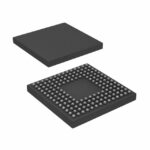 ADBF532WYBCZ406
The activity of extra discounts on wholesale prices is in full swing…
Please fill in your contact information and we will send you the latest wholesale price list.






