 ChipApex | Global Electronic Components Supplier
SEARCH
Search Product
Search Post
— IC芯片 | 连接器 | 传感器 | 被动器件 —
Search productSearch post
— IC芯片 | 连接器 | 传感器 | 被动器件 —
Consult the customer manager about the wholesale price.
consultation hotline:86-132-6715-2157
email:[email protected]
Contact the product manager for consultation. One-stop consultation is available.
Do you want a lower wholesale price? Please send us your inquiry and we will reply immediately.
The ADC31RF80IRMPT is a high-performance, dual-channel, 14-bit analog-to-digital converter (ADC) designed for direct RF sampling applications. It features an integrated wideband track-and-hold amplifier and a differential input structure capable of handling frequencies up to 6 GHz. The device operates with a single 1.8V analog supply and utilizes a 1.2V digital core voltage. It supports data rates up to 2.5 GSPS and includes on-chip clock distribution circuitry to minimize jitter. The component is housed in a 48-pin Ball Grid Array (BGA) package suitable for automated surface-mount assembly.
Verify the specific suffix 'MPT' against the manufacturer's official documentation to confirm tape-and-reel packaging specifications and quantity per reel. Ensure the operating temperature range aligns with system requirements before procurement. Cross-reference the date code and lot number with authorized distributors to prevent counterfeit components. Confirm that the pinout matches the design schematic, as variations may exist between revisions.
Select this component when direct RF sampling at frequencies above 1 GHz is required without external downconversion. Evaluate the power consumption profile against thermal constraints, as high-speed operation increases dynamic current draw. Consider the available clocking solutions, as low-jitter clock sources are critical for maintaining signal integrity. Compare performance metrics such as SFDR and SNR against alternative devices if specific dynamic range requirements exceed standard specifications.
This device belongs to Texas Instruments' high-speed ADC portfolio focused on RF applications. It complements other direct-sampling converters by offering a balance between bandwidth and resolution. The product line targets designers moving away from traditional superheterodyne architectures to simplify board space and reduce component count in modern communication systems.
Publicly confirmed substitute part numbers are not available in verified documentation. Alternative devices must be evaluated based on functional equivalence, including sampling rate, input bandwidth, and interface compatibility. Verify pin-to-pin compatibility if a direct replacement is necessary to avoid redesigning the PCB layout.
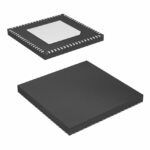 ADC31RF80IRMPT
The activity of extra discounts on wholesale prices is in full swing…
Please fill in your contact information and we will send you the latest wholesale price list.





