 ChipApex | Global Electronic Components Supplier
SEARCH
Search Product
Search Post
— IC芯片 | 连接器 | 传感器 | 被动器件 —
Search productSearch post
— IC芯片 | 连接器 | 传感器 | 被动器件 —
Consult the customer manager about the wholesale price.
consultation hotline:86-132-6715-2157
email:[email protected]
Contact the product manager for consultation. One-stop consultation is available.
Do you want a lower wholesale price? Please send us your inquiry and we will reply immediately.
The ADF5904WCCPZ is a four-channel, 24 GHz receiver downconverter MMIC designed for digital beamforming applications. It operates within the 24 GHz to 24.25 GHz frequency range with a gain of 22 dB and a noise figure of 10 dB. The device features a P1dB compression point of -10 dBm and an OIP3 of 0 dBm. Power consumption is 0.5 mW per channel when all four channels are active. It supports an LO input range from -8 dBm to +5 dBm and provides RF signal bandwidth of 250 MHz. The component utilizes a 32-pin LFCSP-32 package measuring 5 mm x 5 mm with a height of 0.73 mm.
Verify the specific suffix 'W' against the official Analog Devices datasheet to confirm the exact package variant and material specifications. Ensure compatibility with the required SPI interface configuration for control signals. Cross-reference the operating voltage range of 3.135 V to 3.465 V with the system power supply design. Confirm that the LFCSP-32 thermal pad requirements align with the target PCB copper area for adequate heat dissipation during continuous operation.
Select this component for multi-channel receiver architectures requiring high integration and low power consumption at 24 GHz. It is appropriate for designs prioritizing reduced board space through simplified single-ended antenna connections. Consider the integrated temperature sensor if system calibration resources are limited. Evaluate the 250 MHz bandwidth against the required signal processing capabilities of the downstream ADCs.
The ADF5904WCCPZ belongs to the ADF5904 family of highly integrated receiver downconverters. It is part of Analog Devices' portfolio targeting millimeter-wave applications where size and power efficiency are critical constraints. The device complements other RF components in radar and sensing ecosystems by providing a compact solution for multi-channel signal acquisition.
The ADF5904ACPZ is a documented alternative within the same product family offering similar electrical characteristics. Verify pinout compatibility and software register settings before substitution. No other public substitute part numbers are confirmed in the provided documentation.
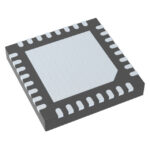 ADF5904WCCPZ
The activity of extra discounts on wholesale prices is in full swing…
Please fill in your contact information and we will send you the latest wholesale price list.





