 ChipApex | Global Electronic Components Supplier
SEARCH
Search Product
Search Post
— IC芯片 | 连接器 | 传感器 | 被动器件 —
Search productSearch post
— IC芯片 | 连接器 | 传感器 | 被动器件 —
Consult the customer manager about the wholesale price.
consultation hotline:86-132-6715-2157
email:[email protected]
Contact the product manager for consultation. One-stop consultation is available.
Do you want a lower wholesale price? Please send us your inquiry and we will reply immediately.
The ADG2128BCPZ-REEL is an I²C-compatible CMOS analog crosspoint switch array manufactured by Analog Devices Inc. It features a fully flexible 8 × 12 matrix, providing 96 independently addressable bidirectional signal channels. The device supports standard, fast, and high-speed (3.4 MHz) I²C interfaces for configuration. It operates on dual ±5 V or single +12 V supplies, with an industrial temperature range of −40°C to +85°C. Key electrical specifications include a maximum on-resistance of 35 Ω, up to 300 MHz bandwidth, and low quiescent current below 20 µA. The component is housed in a 32-lead LFCSP package.
Verify the specific suffix 'REEL' indicates tape-and-reel packaging when sourcing components. Confirm that the 'B' version meets the required -40°C to +85°C operating temperature range. Ensure the design accommodates the 32-lead LFCSP footprint and utilizes the exposed paddle for thermal management and grounding as specified in the datasheet.
Select this part for applications requiring a high-density analog routing matrix controlled via a simple two-wire serial bus. The B-version variant is suitable for industrial environments, while the Y-version is required for automotive-grade temperature ranges. Consider the 3.4 MHz I²C option if faster switching speeds are necessary, though the standard model supports up to 400 kHz.
The ADG2128 belongs to Analog Devices' family of I²C-controlled analog crosspoint switches. It is designed to replace mechanical relays and discrete multiplexer arrays in complex signal routing scenarios. The device integrates double-buffered input logic and allows for synchronous updates across multiple channels, making it ideal for dynamic system reconfiguration without signal interruption.
The ADG2128YCPZ is the automotive-grade alternative offering an extended temperature range up to +125°C. For lower channel counts, the ADG715 provides a 4x4 matrix, while the ADG1419 offers a 16x16 configuration. Verify pin compatibility and I²C addressing requirements when substituting these devices.
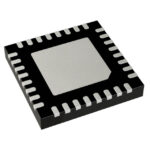 ADG2128BCPZ-REEL
The activity of extra discounts on wholesale prices is in full swing…
Please fill in your contact information and we will send you the latest wholesale price list.





