 ChipApex | Global Electronic Components Supplier
SEARCH
Search Product
Search Post
— IC芯片 | 连接器 | 传感器 | 被动器件 —
Search productSearch post
— IC芯片 | 连接器 | 传感器 | 被动器件 —
Consult the customer manager about the wholesale price.
consultation hotline:86-132-6715-2157
email:[email protected]
Contact the product manager for consultation. One-stop consultation is available.
Do you want a lower wholesale price? Please send us your inquiry and we will reply immediately.
The ADG2128YCPZ-HS-RL7 is an I²C-controlled CMOS analog crosspoint switch featuring an 8 × 12 matrix (96 channels) in a 32-lead LFCSP package. It supports dual ±5 V or single +12 V operation with a maximum on-resistance of 35 Ω and low quiescent current under 20 µA. The -HS suffix designates support for high-speed I²C interfaces up to 3.4 MHz, enabling rapid configuration updates. The device offers simultaneous switch updates via the LDSW command, hardware reset functionality, and readback capabilities. It is qualified for automotive applications and operates within extended temperature ranges.
Verify that the ordering suffix matches the required performance specifications. The HS designation specifically enables high-speed I²C communication at 3.4 MHz; omitting this suffix results in standard speed limitations. Confirm the Y version meets the extended operating temperature range requirements if deployed in automotive or industrial settings. Ensure the LFCSP package handling procedures align with moisture sensitivity levels.
Select the ADG2128YCPZ-HS-RL7 when system timing constraints require fast serial bus updates beyond standard I²C speeds. The Y version provides an extended temperature range suitable for automotive environments compared to the B version. Consider the 32-lead LFCSP footprint for space-constrained PCB layouts. Verify that the logic voltage levels are compatible with the host microcontroller's I/O standards before integration.
This component belongs to the Analog Devices ADG2128 family of analog crosspoint switches. The specific part number indicates the Y temperature grade and HS high-speed interface variant. It shares the core 8x12 matrix architecture with other variants but differs in electrical performance limits and interface capabilities defined by its suffix codes.
Direct substitutes include other ADG2128 variants such as ADG2128BCPZ or ADG2128YCPZ. Note that non-HS versions lack 3.4 MHz I²C support. Cross-vendor replacements require careful evaluation of pin compatibility, on-resistance characteristics, and control protocol differences.
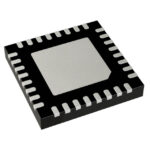 ADG2128YCPZ-HS-RL7
The activity of extra discounts on wholesale prices is in full swing…
Please fill in your contact information and we will send you the latest wholesale price list.





