 ChipApex | Global Electronic Components Supplier
SEARCH
Search Product
Search Post
— IC芯片 | 连接器 | 传感器 | 被动器件 —
Search productSearch post
— IC芯片 | 连接器 | 传感器 | 被动器件 —
Consult the customer manager about the wholesale price.
consultation hotline:86-132-6715-2157
email:[email protected]
Contact the product manager for consultation. One-stop consultation is available.
Do you want a lower wholesale price? Please send us your inquiry and we will reply immediately.
The ADIN1300CCPZ-R7 is a low-power, single-port Gigabit Ethernet transceiver designed for industrial applications. It supports 10BASE-Te, 100BASE-TX, and 1000BASE-T standards with MII, RMII, and RGMII MAC interfaces. Key electrical parameters include transmit latency of less than 68 ns and receive latency of less than 226 ns at 1000BASE-T via RGMII. Power consumption is 330 mW at 1000BASE-T and 140 mW at 100BASE-TX. The device operates on supply voltages of 0.9 V, 1.8 V/2.5 V/3.3 V, and 3.3 V, within an ambient temperature range of −40°C to +105°C.
Verify the specific ordering suffix matches the required package type and tape/reel configuration. Confirm that the voltage domain requirements align with the host MAC interface specifications. Ensure environmental ratings meet the operational temperature constraints of the target deployment site. Cross-reference the revision level with the latest datasheet to confirm feature availability and electrical characteristics.
Select this component when deterministic latency and low power consumption are critical for industrial Ethernet deployments. The ADIN1300 supports multiple MAC interfaces, allowing flexibility in system architecture. Consider the integrated EEE functionality for applications with restricted airflow or high ambient temperatures. Verify compatibility with existing IEEE 1588 timestamping requirements for network synchronization.
The ADIN1300 belongs to Analog Devices' Chronous industrial Ethernet portfolio, addressing challenges in Industry 4.0 connectivity. It integrates a PHY core with analog circuitry, clock buffering, and management logic. This consolidation simplifies design by reducing external component count while maintaining robust performance in harsh environments compared to consumer-grade alternatives.
Public documentation confirms the ADIN1200 as a related variant offering 10 Mbps and 100 Mbps speeds with similar interfacing but lower throughput. Hardware and software interfaces remain identical between the two devices, facilitating potential migration strategies where gigabit speeds are not required.
The device supports MII, RMII, and RGMII interfaces. Configuration can be performed via hardware strapping pins upon power-up or through software registers accessed via the MDIO/MDC management interface.
The ADIN1300 includes cable diagnostics features such as Time Domain Reflectometry (TDR) for length estimation and signal analysis for assessing signal quality and detecting polarity inversions or pair swaps.
Yes, the device supports TSN and includes start-of-packet detection for IEEE 1588 timestamping, which reduces timing uncertainty in real-time applications.
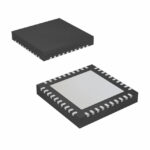 ADIN1300CCPZ-R7
The activity of extra discounts on wholesale prices is in full swing…
Please fill in your contact information and we will send you the latest wholesale price list.





