 ChipApex | Global Electronic Components Supplier
SEARCH
Search Product
Search Post
— IC芯片 | 连接器 | 传感器 | 被动器件 —
Search productSearch post
— IC芯片 | 连接器 | 传感器 | 被动器件 —
Consult the customer manager about the wholesale price.
consultation hotline:86-132-6715-2157
email:[email protected]
Contact the product manager for consultation. One-stop consultation is available.
Do you want a lower wholesale price? Please send us your inquiry and we will reply immediately.
The ADIN2299BBCZ is a multiprotocol industrial Ethernet platform module from Analog Devices, integrating a communications controller, two-port 10/100 Mbps Ethernet switch, memory, PHY, and protocol stacks. It supports precertified protocols including PROFINET RT (Class B), PROFINET IRT (Class C), EtherNet/IP with DLR, EtherCAT, and Modbus/TCP. The device operates on a single 3.3 V supply with a maximum power dissipation of 840 mW. Cycle times can reach down to 1 ms depending on the protocol and application data. It features an applications processor interface via UART (115,200 bps to 1,000,000 bps), SPI follower (10 MHz max clock), or Ethernet. The component is housed in a 194-ball BGA package and functions within an industrial temperature range of –40°C to +85°C.
Verify the specific ordering suffix BBCZ against the manufacturer's current datasheet to confirm pinout and package compatibility. Ensure that the procurement source provides valid RoHS 3 compliance documentation. Confirm that the component meets the required industrial temperature specifications for the intended deployment environment before finalizing orders.
Select this module when a unified hardware design must support multiple industrial protocols without modifying the application processor software. It is suitable for space-constrained designs requiring embedded solutions or small form factors. Consider the integrated security features and low latency requirements when evaluating alternatives for deterministic control applications.
This component belongs to the RapID Platform Generation 2 series by Analog Devices. It serves as a comprehensive connectivity solution for field devices needing robust, deterministic Ethernet capabilities. The platform reduces integration time by providing pre-validated protocol stacks and real-time operating system components alongside the hardware.
Public confirmed substitute part numbers are not available in the provided documentation. Verify compatibility with existing board layouts and firmware interfaces if considering alternative multiprotocol Ethernet modules from other manufacturers.
The interface is selected using the LT0, LT1, and LT2 balls. Setting these pins to specific logic levels configures the link type for UART0, SPI, or Ethernet communication with the host processor.
The SPI follower connection supports a maximum clock rate of 10 MHz. Data is captured on the leading edge with a clock phase bit (CPHA) of 0 and a clock polarity bit (CPOL) of 0.
Yes, the device supports PROFINET IRT (Class C) along with PROFINET RT (Class B), EtherCAT, EtherNet/IP with DLR, and Modbus/TCP.
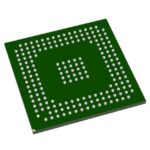 ADIN2299BBCZ
The activity of extra discounts on wholesale prices is in full swing…
Please fill in your contact information and we will send you the latest wholesale price list.






