 ChipApex | Global Electronic Components Supplier

SEARCH
Search Product
Search Post
— IC芯片 | 连接器 | 传感器 | 被动器件 —
Search productSearch post
— IC芯片 | 连接器 | 传感器 | 被动器件 —
Consult the customer manager about the wholesale price.
consultation hotline:86-132-6715-2157
email:[email protected]
Contact the product manager for consultation. One-stop consultation is available.
Do you want a lower wholesale price? Please send us your inquiry and we will reply immediately.
The ADL5566ACPZ-R7 is a dual differential amplifier fabricated on a high-speed SiGe process, optimized for IF and DC applications. It features a fixed gain of 16 dB with a -3 dB bandwidth of 4.5 GHz. The device operates on a single supply voltage ranging from 2.8 V to 5.2 V, consuming 140 mA at 3.3 V. It provides low noise spectral density of 1.3 nV/√Hz and maintains excellent distortion performance across wide frequency ranges. Packaged in a compact 4 mm × 4 mm, 24-lead LFCSP, it supports both AC and DC coupling.
Verify the specific package marking and date code against the manufacturer's latest ordering guide before finalizing procurement. Confirm that the R7 suffix corresponds to the reel packaging format required by your assembly line equipment. Ensure compatibility with the specified operating temperature range of -40°C to +85°C for your intended environment.
Select this component when driving high-speed ADCs requiring low noise and high linearity. Consider the 16 dB fixed gain as a baseline; external resistors can reduce gain if necessary. Evaluate the 2.8 V to 5.2 V supply range against system power constraints. Verify that the 24-lead LFCSP footprint fits within the available PCB area and thermal management capabilities.
This part belongs to Analog Devices' family of ultrahigh dynamic range dual differential amplifiers. It shares architectural similarities with models like the ADL5561 and ADL5567 but offers distinct gain and bandwidth characteristics tailored for zero-IF and complex IF receiver designs. The SiGe process ensures high speed and low power consumption compared to standard bipolar technologies.
Check datasheets for ADL5561, ADL5565, ADL5567, and ADL5569 for potential functional substitutes. Verify pinout compatibility and gain specifications, as these variants offer different fixed gains or programmable options. Ensure the replacement part supports the required 4.5 GHz bandwidth and 24-lead LFCSP package.
Yes, the fixed 16 dB gain can be reduced by adding external series resistors to the inputs, allowing for any gain selection from 0 dB to 16 dB for differential input.
The output common-mode voltage can be adjusted via the VCOMx pins. For a 3.3 V supply, it ranges from 1.25 V to 1.8 V, and up to 3 V for a 5 V supply.
Pulling the ENBL1 or ENBL2 pins low disables the respective amplifier, reducing quiescent current to less than 7 mA per amplifier while maintaining -25 dB isolation.
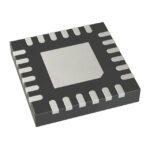 ADL5566ACPZ-R7

The activity of extra discounts on wholesale prices is in full swing…
Please fill in your contact information and we will send you the latest wholesale price list.






