 ChipApex | Global Electronic Components Supplier
SEARCH
Search Product
Search Post
— IC芯片 | 连接器 | 传感器 | 被动器件 —
Search productSearch post
— IC芯片 | 连接器 | 传感器 | 被动器件 —
Consult the customer manager about the wholesale price.
consultation hotline:86-132-6715-2157
email:[email protected]
Contact the product manager for consultation. One-stop consultation is available.
Do you want a lower wholesale price? Please send us your inquiry and we will reply immediately.
The ADLD8403ACPZ-RL is a dual-port ADSL/ADSL2+ line driver featuring two differential current feedback amplifiers with integrated feedback resistors and biasing networks. It operates from a single 12.5 V supply, delivering up to 20.4 dBm of line power using Adaptive Linear Power (Class H) technology for high efficiency. The device provides a differential output voltage swing of 43.4 V and maintains a fixed differential gain of 13 V/V. Key electrical specifications include an 8 MHz small-signal bandwidth, less than 600 mW total power dissipation per channel at 20.4 dBm output, and a typical multitone power ratio (MTPR) of −65 dBc across the 26 kHz to 2.2 MHz frequency range.
Verify component authenticity through authorized Analog Devices distributors or certified partners. Confirm the specific package option CP-20-8 matches design requirements. Ensure compliance with RoHS directives as indicated by the Z suffix in the ordering guide. Review the latest datasheet revision for any updates to absolute maximum ratings or thermal characteristics before finalizing procurement.
Select this component for designs requiring high output voltage swing and efficient power management in xDSL systems. Evaluate thermal resistance values against the expected ambient temperature and PCB copper area to ensure junction temperatures remain within safe limits. Consider the fixed 13 V/V gain and 8 MHz bandwidth when matching analog front-end specifications. Verify that external transformer coupling and protection components meet ITU-T-K20 and GR-1089 standards.
The ADLD8403 belongs to Analog Devices' specialized line driver family optimized for broadband access infrastructure. It replaces older Class AB architectures by utilizing dynamic pumped supplies to reduce heat generation. This integration simplifies board layout by combining amplification, biasing, and power management into a single compact LFCSP package, reducing overall system cost and footprint.
Public confirmed substitute part numbers are not available in the provided documentation. Designers should consult Analog Devices directly for legacy replacement strategies or updated product recommendations.
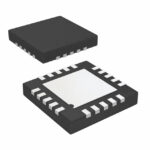 ADLD8403ACPZ-RL
The activity of extra discounts on wholesale prices is in full swing…
Please fill in your contact information and we will send you the latest wholesale price list.






