 ChipApex | Global Electronic Components Supplier
SEARCH
Search Product
Search Post
— IC芯片 | 连接器 | 传感器 | 被动器件 —
Search productSearch post
— IC芯片 | 连接器 | 传感器 | 被动器件 —
Consult the customer manager about the wholesale price.
consultation hotline:86-132-6715-2157
email:[email protected]
Contact the product manager for consultation. One-stop consultation is available.
Do you want a lower wholesale price? Please send us your inquiry and we will reply immediately.
The ADM1021AARQ is a two-channel digital thermometer and undertemperature/overtemperature alarm designed for microprocessor system thermal monitoring. It features on-chip and remote temperature sensing with ±1°C accuracy for the local sensor and ±3°C accuracy for the remote sensor, requiring no calibration. The device operates on a 3 V to 5.5 V supply, drawing 200 μA maximum operating current and 1 μA standby current. It communicates via a 2-wire SMBus serial interface and supports programmable conversion rates and alert thresholds.
Verify the specific ordering suffix against the manufacturer's official documentation to confirm package type and tape/reel specifications. Confirm RoHS compliance status as manufacturing processes may vary by production batch. Ensure the component source is authorized to guarantee authenticity and traceability for critical thermal management applications.
Select this component for systems requiring precise thermal monitoring of microprocessors and ambient environments without manual calibration overhead. The dual-sensor architecture allows simultaneous tracking of processor junction temperature and board-level heat dissipation. Verify that the required SMBus address configuration aligns with existing bus topology constraints.
This device serves as a low-cost alternative to the standard ADM1021, offering enhanced noise immunity through increased remote sensor source current. While maintaining pin-for-pin compatibility, it differs in measurement range and default register states. It belongs to the Analog Devices and ON Semiconductor family of system management monitors.
The ADM1021 is the predecessor model; verify if negative temperature measurement capabilities below 0°C are required, as the ADM1021A range starts at 0°C. Check register defaults and revision codes to ensure software compatibility during migration.
It employs a measurement technique that determines the change in base-emitter voltage (ΔVBE) when operated at two different currents, effectively canceling out the absolute VBE variation inherent to individual transistors.
These three-state logic inputs allow the selection of one of nine possible SMBus device addresses, enabling multiple devices to coexist on the same serial bus without address conflicts.
The ALERT output is an open-drain signal that goes low when temperature limits are exceeded. It can be masked via the Configuration Register Bit 7 or cleared by reading the Status Register after the fault condition resolves.
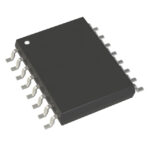 ADM1021AARQ
The activity of extra discounts on wholesale prices is in full swing…
Please fill in your contact information and we will send you the latest wholesale price list.





