 ChipApex | Global Electronic Components Supplier
SEARCH
Search Product
Search Post
— IC芯片 | 连接器 | 传感器 | 被动器件 —
Search productSearch post
— IC芯片 | 连接器 | 传感器 | 被动器件 —
Consult the customer manager about the wholesale price.
consultation hotline:86-132-6715-2157
email:[email protected]
Contact the product manager for consultation. One-stop consultation is available.
Do you want a lower wholesale price? Please send us your inquiry and we will reply immediately.
The ADM1021AARQZ is a two-channel digital thermometer and undertemperature/overtemperature alarm manufactured by onsemi. It features an on-chip local sensor with ±1°C accuracy and a remote channel supporting discrete or processor-integrated diodes with ±3°C to ±5°C accuracy. The device operates on a 3 V to 5.5 V supply, drawing 200 μA max in active mode and 1 μA in standby. It communicates via a 2-wire SMBus interface compatible with system management standards. Housed in a 16-lead QSOP package, it provides programmable limits and conversion rates for thermal monitoring.
Verify the specific suffix R7 against the datasheet ordering guide to confirm reel packaging specifications. Confirm the component status as discontinued or limited supply through official onsemi channels prior to design finalization. Ensure the QSOP-16 package dimensions match the target PCB footprint requirements. Validate SMBus address pin configurations (ADD0, ADD1) for system bus compatibility.
Select this component when dual-zone thermal monitoring is required within a compact surface-mount form factor. The ADM1021A is suitable for systems needing calibrated-free operation with standard SMBus connectivity. Consider the remote sensor source current requirements when interfacing with discrete transistors versus processor-integrated sensors. Verify that the 3 V to 5.5 V supply range aligns with the system's available voltage rails.
The ADM1021A is part of onsemi's hardware monitor and system temperature sensor portfolio. It serves as an alternative to the earlier ADM1021 model, offering improved noise immunity through higher remote sensor source currents. The device belongs to the broader category of board-mount temperature sensor ICs designed for microprocessor and system thermal management applications.
The ADM1021 is the primary predecessor model. Key differences include the ADM1021A's inability to measure negative temperatures and its undefined power-on address pointer state. Verify register defaults and temperature range limitations before substituting.
The device sets a specific flag in the Status Register if the remote temperature sensor is detected as open-circuit. This flag contributes to triggering the ALERT output if not masked.
Pulling the STBY pin low places the device into standby mode, disabling the ADC conversion. In this state, stored temperature values remain unchanged, and power consumption is minimized.
Yes, up to nine devices can be addressed on a single bus using the three-state ADD0 and ADD1 pins to select unique 7-bit addresses based on their connection to VDD, GND, or floating states.
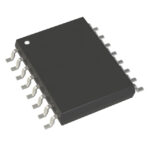 ADM1021AARQZ
The activity of extra discounts on wholesale prices is in full swing…
Please fill in your contact information and we will send you the latest wholesale price list.





