 ChipApex | Global Electronic Components Supplier
SEARCH
Search Product
Search Post
— IC芯片 | 连接器 | 传感器 | 被动器件 —
Search productSearch post
— IC芯片 | 连接器 | 传感器 | 被动器件 —
Consult the customer manager about the wholesale price.
consultation hotline:86-132-6715-2157
email:[email protected]
Contact the product manager for consultation. One-stop consultation is available.
Do you want a lower wholesale price? Please send us your inquiry and we will reply immediately.
The ADM1170-2AUJZ-RL7 is a dual-channel hot swap voltage controller manufactured by Analog Devices Inc. It supports an input supply voltage range from 1.6 V to 16.5 V and features adjustable current limiting for each channel. The device operates within a temperature range of -40°C to +85°C and is housed in a TSOT-8 surface-mount package. Designed for safe insertion and removal of boards from live backplanes, it integrates power-fail detection and auto-retry functionality to ensure system reliability during fault conditions.
Verify the specific suffix RL7 indicates reel packaging configuration when sourcing. Confirm the dual-channel variant matches system requirements compared to single-channel alternatives like the ADM1170-1AUJZ. Ensure compatibility with the target board's thermal dissipation capabilities given the TSOT-8 package constraints. Cross-reference the manufacturer datasheet for exact pinout and electrical characteristics prior to integration.
Select this component when dual independent hot swap channels are required within a compact footprint. Compare against the ADM1171 series if higher performance or additional features are needed. Evaluate the input voltage range suitability for the specific bus architecture. Consider the TSOT-8 package size constraints relative to available PCB real estate and thermal management strategies for the application environment.
This part belongs to the ADM117x family of hot swap controllers from Analog Devices. It shares functional similarities with the ADM1170-1AUJZ but provides dual channels instead of one. The series is designed for robust power management in environments requiring frequent board maintenance. It complements other PMIC solutions by handling high-inrush currents safely without disrupting the main power bus.
The ADM1170-1AUJZ-RL7 serves as a single-channel alternative within the same family. For dual-channel applications requiring different specifications, the ADM1172-2AUJZ-RL7 may be considered. Verify pin-to-pin compatibility and electrical parameter alignment before substituting any component in existing designs.
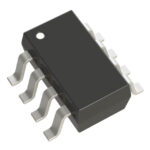 ADM1170-2AUJZ-RL7
The activity of extra discounts on wholesale prices is in full swing…
Please fill in your contact information and we will send you the latest wholesale price list.





