 ChipApex | Global Electronic Components Supplier
SEARCH
Search Product
Search Post
— IC芯片 | 连接器 | 传感器 | 被动器件 —
Search productSearch post
— IC芯片 | 连接器 | 传感器 | 被动器件 —
Consult the customer manager about the wholesale price.
consultation hotline:86-132-6715-2157
email:[email protected]
Contact the product manager for consultation. One-stop consultation is available.
Do you want a lower wholesale price? Please send us your inquiry and we will reply immediately.
The ADM202JRWZ-REEL is a dual-channel RS-232 line driver and receiver manufactured by Analog Devices Inc. It operates from a single 5 V power supply and utilizes an on-chip charge pump to generate ±10 V output levels, requiring only 0.1 µF external capacitors. The device supports data rates up to 120 kB and meets TIA/EIA-232-E specifications. It features low power consumption of 2.5 mA typical current, ±30 V receiver input protection, and ESD protection exceeding 2 kV. Packaged in a 16-lead wide SOIC (RW-16) in reel format, it functions within a commercial temperature range of 0°C to 70°C.
Verify the specific ordering suffix to confirm package dimensions and tape-and-reel quantity. Confirm RoHS compliance status indicated by the 'Z' suffix. Ensure the supplier provides valid traceability documentation for the Analog Devices manufacturer part number. Check that the delivery matches the specified reel packaging requirements for surface mount assembly processes.
Select this component when a single 5 V supply interface is required for RS-232 communication without external voltage inverters. The wide SOIC package suits applications needing robust thermal performance or larger spacing. Verify that the 120 kB baud rate and ±9 V output swing meet the specific link budget requirements of the target system design.
This part belongs to the ADM202 series of CMOS RS-232 transceivers designed for low-power, single-supply operation. The RW-16 designation indicates a 16-lead wide small outline package, while the REEL suffix specifies the bulk tape-and-reel packaging format intended for automated surface-mount placement equipment.
ADM202JRNZ-REEL offers identical electrical characteristics but uses a narrow SOIC package instead of the wide variant. Other ADM202 variants share the same core functionality but differ primarily in physical package footprint and manufacturing lot configurations.
The device supports a baud rate of up to 120 kB under standard load conditions.
Unused TTL/CMOS inputs are pulled high internally via a 400 kΩ resistor, forcing the corresponding outputs into a low state.
No, the slew rate is limited to less than 30 V/µs internally, eliminating the need for external capacitors for this purpose.
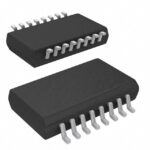 ADM202JRWZ-REEL
The activity of extra discounts on wholesale prices is in full swing…
Please fill in your contact information and we will send you the latest wholesale price list.







