 ChipApex | Global Electronic Components Supplier
SEARCH
Search Product
Search Post
— IC芯片 | 连接器 | 传感器 | 被动器件 —
Search productSearch post
— IC芯片 | 连接器 | 传感器 | 被动器件 —
Consult the customer manager about the wholesale price.
consultation hotline:86-132-6715-2157
email:[email protected]
Contact the product manager for consultation. One-stop consultation is available.
Do you want a lower wholesale price? Please send us your inquiry and we will reply immediately.
The ADM206ARS is a CMOS RS-232 transceiver from the ADM2xx family, designed for EIA-232-E and V.28 interfaces using a single 5 V supply. It integrates four drivers and three receivers with an active-high shutdown control that reduces power dissipation to less than 5 μW. The device utilizes internal charge pumps to generate ±10 V levels from the 5 V input, requiring only four external capacitors ranging from 0.1 μF to 10 μF. It supports data rates up to 120 kB/s and features Schmitt-trigger inputs for noise immunity. The component operates within an industrial temperature range of -40°C to +85°C and is housed in a 24-lead SSOP package.
Verify the specific ordering suffix 'S' corresponds to the 24-lead Shrink Small Outline Package (SSOP) as defined in the manufacturer's ordering guide. Confirm RoHS compliance status by checking for the 'Z' suffix if lead-free components are required. Ensure the selected variant matches the intended thermal and mechanical constraints for the target application design.
Select this model when a compact surface-mount footprint is required alongside low power shutdown capabilities. The ADM206 provides four drivers and three receivers, distinguishing it from variants with different channel counts like the ADM207 or ADM208. Verify that the system requires an active-high shutdown signal, as other family members may utilize different control polarities.
This component belongs to the ADM2xx series of line drivers and receivers developed by Analog Devices. The series addresses communication interface needs where traditional ±12 V supplies are unavailable. The ADM206 specifically offers a balanced configuration of four transmit and three receive channels, serving as a pin-compatible alternative to legacy MAX206 designs while utilizing modern CMOS technology for reduced power consumption.
The datasheet indicates the ADM2xx family is essentially plug-in compatible with MAX206-211/213 derivatives. Designers should verify pinout alignment and control signal polarity differences before substituting these parts.
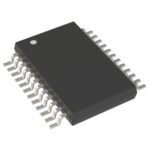 ADM206ARS
The activity of extra discounts on wholesale prices is in full swing…
Please fill in your contact information and we will send you the latest wholesale price list.





