 ChipApex | Global Electronic Components Supplier
SEARCH
Search Product
Search Post
— IC芯片 | 连接器 | 传感器 | 被动器件 —
Search productSearch post
— IC芯片 | 连接器 | 传感器 | 被动器件 —
Consult the customer manager about the wholesale price.
consultation hotline:86-132-6715-2157
email:[email protected]
Contact the product manager for consultation. One-stop consultation is available.
Do you want a lower wholesale price? Please send us your inquiry and we will reply immediately.
The ADM209ARS is a dual transmitter and single receiver RS-232 transceiver from Analog Devices, designed for EIA/TIA-232-F and V.28/V.24 interfaces. It operates from a single +5 V supply using an on-chip charge pump to generate ±10 V internal rails, eliminating the need for external negative voltage sources. The device features one driver with 5-V TTL-compatible inputs and one receiver with 3-V TTL-compatible outputs. Key electrical parameters include a data rate of 120 kbps, output voltage swings of ±5 V to ±9 V, and input protection up to ±30 V. It is housed in a 16-pin SOIC package.
Verify the specific suffix 'ARS' corresponds to the 16-lead Small Outline Package (SOIC) and commercial temperature range when sourcing. Confirm RoHS compliance status if required by your manufacturing standards. Cross-reference the manufacturer part number with authorized distributors to ensure authenticity and traceability. Check for any recent lifecycle notices regarding obsolescence or last-time buy status before finalizing procurement plans.
Select this component when a single-supply RS-232 solution is needed without external inductors or capacitors for voltage inversion. It is suitable for applications where space constraints prevent the use of larger packages or multiple power rails. Consider the 120 kbps speed limit; higher speeds require alternative devices. Ensure the load capacitance requirements are met within the specified operating temperature range for reliable signal integrity.
This part belongs to the ADM2xx series of RS-232 transceivers, which are direct upgrades for older MAX205/MAX232 equivalents. Unlike the ADM213, which includes shutdown modes and multiple receivers, the ADM209 offers a simpler configuration with one driver and one receiver. It shares the same core charge-pump technology as other members of the family but lacks advanced power management features found in later revisions.
Direct pin-to-pin replacements include the ADM208EARSZ and ADM209ARZ. Verify that the replacement variant meets the same package and temperature specifications. Note that ESD-protected versions may have slightly different internal structures but maintain functional compatibility.
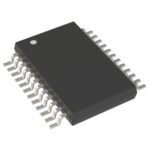 ADM209ARS
The activity of extra discounts on wholesale prices is in full swing…
Please fill in your contact information and we will send you the latest wholesale price list.





